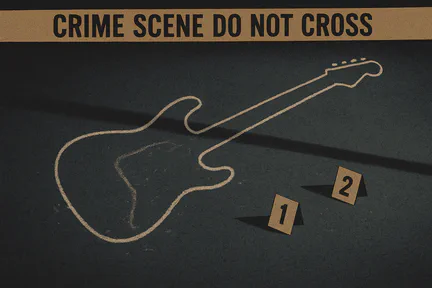
The bass riff under Ice-T's I'm Your Pusher is six notes long. Getting to the bottom of them runs through a 1972 nightclub scene, a garage in LA, two misread anti-drug records, a rap beef settled by the Zulu Nation, and a shark movie.
In 1982 a musicians' union voted to ban the synthesizer, and they were right about what it would cost them. The gains arrived forty years later, from a toy.
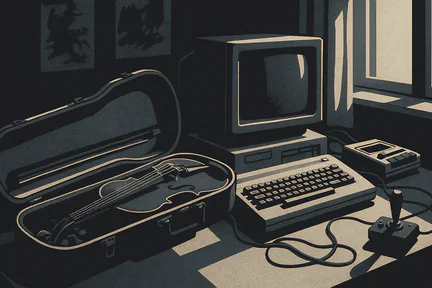
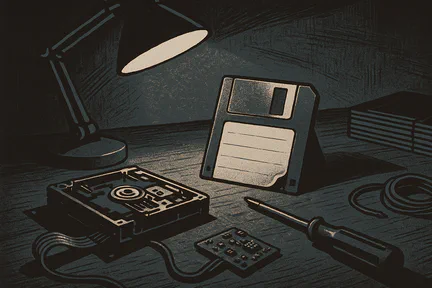
The source code to a game I wrote in 1993 was gone, so I rebuilt it from the shipped binary, deriving every rule by inference. Days after I finished, a floppy gave the source back — and graded the reconstruction. On what you learn by having to prove a thing instead of read it.
I sent a handful of cold emails about a thing I'd built, and one came back accusing me of being the noise. The scathing reply I had half-written was the most satisfying thing I'd composed in months. What stopped me from sending it was the machine I was being accused of hiding behind.
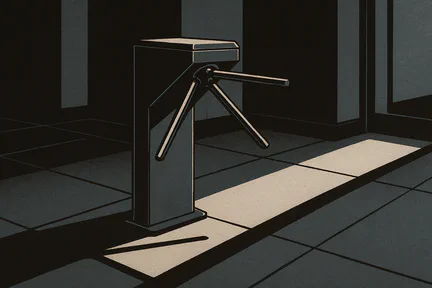
Some processes were never held together by discipline. They were held together by the wait, a delay doing gate-work nobody assigned it. Nobody misses a checkpoint that was never on the org chart.
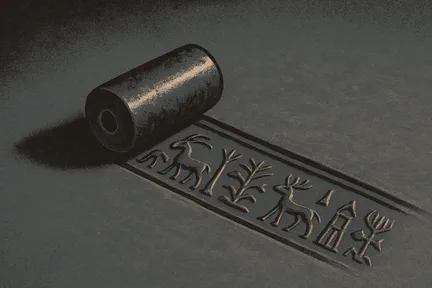
A historian traced five thousand years of document verification and ended on a question: can we build the digital equivalent of the cylinder seal? We did, decades ago. It works exactly as well as the original, which is the part worth understanding.
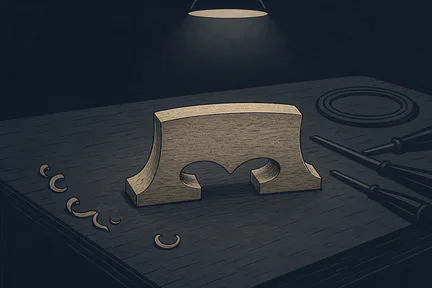
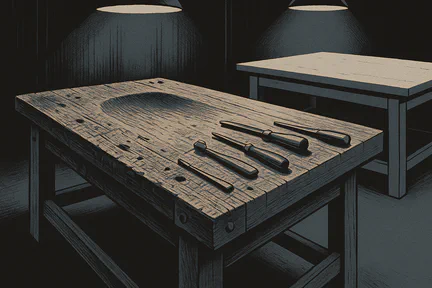
The new mark on this site is traced from a wooden bass bridge Les Paul carved in his home workshop. It reached me through two gifts and one refusal. Nobody charged anybody for any of it.
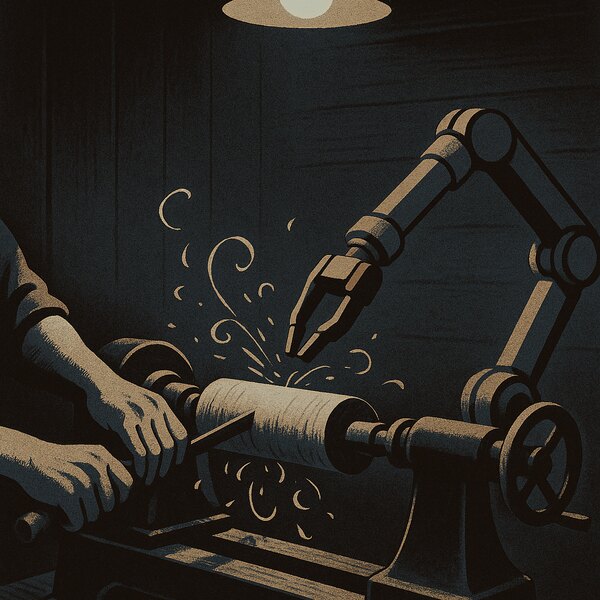
I've built mountain bike trails with hand tools and ridden the kind a machine cuts in a day. The difference was never care. It's a four-foot blade that can't ask above-or-below-this-rock.
I've made Rick Rubin the hero of three essays without once stress-testing him. Strip the reverence off his method and it's a guy in a room saying "again" until it lands. So was the marketing director who did it to my friend Terry. So am I, at an AI prompt, all day.
Why a competent adult would choose to be bad at things on purpose. Two kinds of starting over — the joyful reset and the dragon you've spent a life avoiding — and a dusty inherited guitar I decided to make mean something.
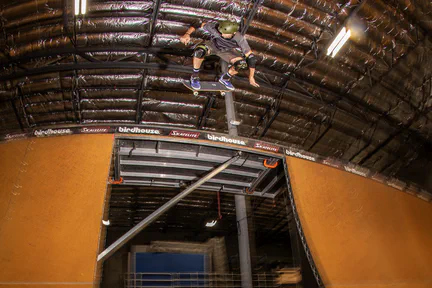
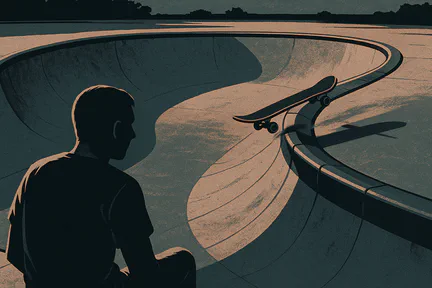
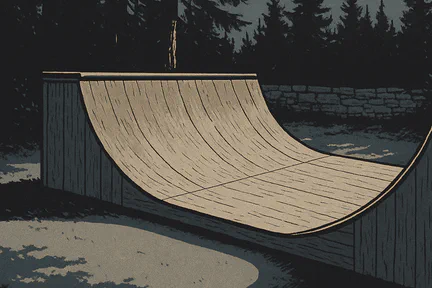
A story about giving away a domain name to a nonprofit and getting a four-year-late thank-you in the form of doubles on a vert ramp. The gift economy of skateboarding still works because both ends of it know how to operate without keeping score.
I use AI every day and disclose it every time, and I think a few companies acquiring the means of thought is one of the most serious things happening in our lifetimes. Those two facts don't fight — and the rage that pretends they do is the surest way to lose the argument that matters.
I spent a run of essays telling you to relocate to your taste. I never said where taste comes from. The forge that built mine is one I'd never run again, and the machine is quietly removing it for everyone coming up behind me.
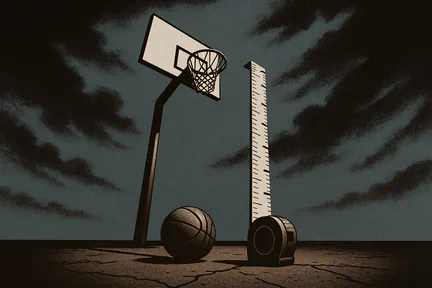
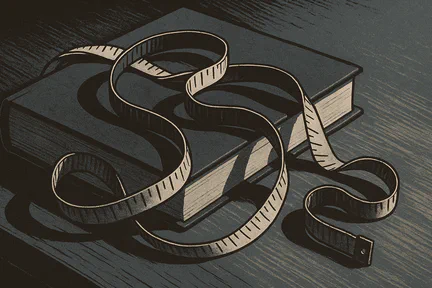
In basketball, height stands in for skill often enough that nobody bothers questioning it. AI is height anyone can rent, and the tape measure is coming for every sport at once.
There is a class of product whose success metric is the user disengaging: falling asleep, finishing the book, putting the controller down. Sojourn is one. Almost everything in the standard playbook inverts.
We already settled how to handle a tool that does part of the work for you. It happened in math class, and nobody in the current panic wants to look at what we decided.
Small room, no scoreboard, and the artifact left to do its own arguing. It doesn't scale to mass. I've been quietly building my projects into that shape anyway.
AI is finishing the job streaming started — turning artists into brands and their work into the brand's marketing. Performance was supposed to be the refuge, but the economics ended up somewhere weirder. We may all be headed toward being t-shirt salesmen.
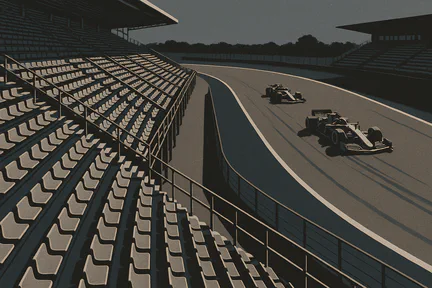
A driverless racing series would be a flawless spectacle with no reason on earth to watch it. The two things optimization can't fake are a clock and a rival.
The art world, supposedly the temple of the artist's hand, abandoned the hand four centuries ago and called it genius. Many hands and one name, the arrangement everyone fears in AI, is the oldest move in fine art.
For four years I wrote the technical screening tests companies used to decide who got programming jobs. I took that work after a GPA filter kept me out of a job I could already do.
Some creative reputations were earned and some were just gatekeeping, and cheap AI is quietly exposing which is which. A field guide to the galleries, labels, and imprints that were protecting the work — and the ones only charging rent to get in. Written from the ungated side, where I've always stood.
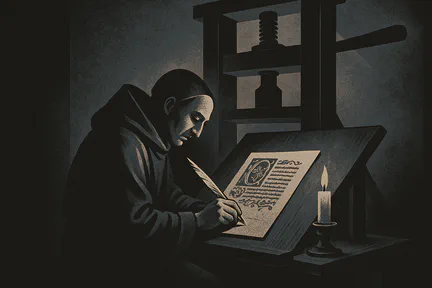
The monastic scribes had a good four hundred years, and nobody sent word it was ending. The paid-creator era is a window of the same kind, and the consolation on offer isn't comfort.
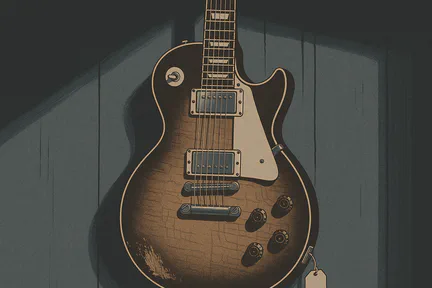
A brand-new guitar, factory-aged to look like it survived forty years of gigs. You can buy the wear. You can't buy the years that earned it, and I'm no longer certain anyone still checks.
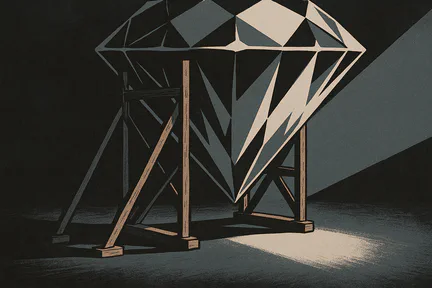
A chemically identical stone, grown in three weeks, for a fraction of the price. It didn't disrupt the diamond. It said out loud what the premium had always been for.
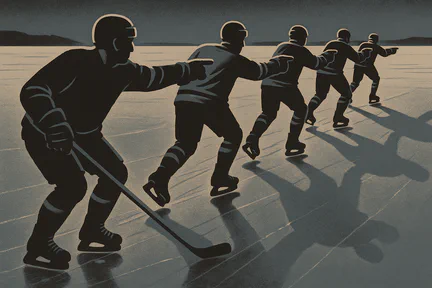
Every player better than you in your beer league is a ringer; every tool past the one you learned on is cheating. The cheating line always indexes to the self — except writing turns out to have one kind of friction the panic keeps getting right by accident.
A quick test for whether AI is coming for something you love: picture the version that does it for you, and watch whether you feel relief or theft. A skateboard riding itself and a backyard beehive explain the rest.
The dream of AI-assisted work is a machine that checks its own output and lets us leave the room. A master forger, and the chemistry that finally caught him, is why I don't think that loop closes.
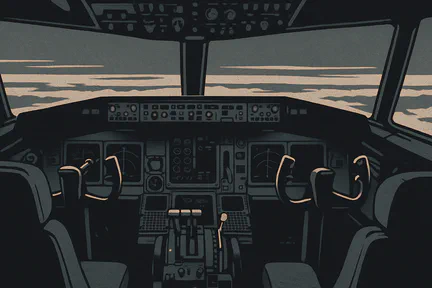
We hand machines near-total control of an airliner at 500 mph with our lives aboard and don't blink, then call it untenable when an AI helps write a jingle. I don't think that asymmetry is hypocrisy.
Music spent a decade trying to legally police influence, in a medium where the units are unusually legible. It went badly, in ways worth knowing before we try the same thing on everything at once.
I built a skateboard mini ramp with the transition radius cut from a vinyl template off an Illustrator drawing. The vinyl stretched, the radius came out an ellipse no one could see — only feel — and fixing it meant tearing the ramp down to a pencil on a string.
Everyone arguing over whether AI-assisted work is 'more than 50% human' is measuring with a unit that never existed. The older questions are the ones I'd rather answer.
Why I say please to a machine that can't feel it, what the habit might be doing to me, and the line between courtesy and contempt I can't quite locate.
I built a tool that detects AI writing, and it called me a fake. The honest test wasn't my AI-assisted essays — it was my pre-AI archive. The tells were in there, dated 2008, including the one I'm most accused of.
Models write two kinds of prose with opposite needs: one where surface noise is texture, one where surface noise is failure. Run Hunter S. Thompson through the wrong one and watch what leaves.
The most undervalued thing AI does for me isn't making things. It's arguing. The sharpest interlocutor I have is a machine, which is a gift and a little lonely.
AI moved the locus of value in software from writing code to deciding what's worth writing. The same move, lagging by a few years, is arriving in the creative arts. And software, a field where the surface has always moved, may have something useful to say about how to meet it.
The through-line under everything else here — the essays, the software, the games, the bees, the skate ramps. It has to do with picking the harder way on purpose, and with knowing when that's just vanity.