Standing on Surfaces That Move
May 28, 2026 · by Michael Morrison
AI moved the locus of value in software from writing code to deciding what's worth writing. The same move, lagging by a few years, is arriving in the creative arts — and software, a field where the surface has always moved, may have something useful to say about how to meet it.

The software engineering job has moved, seemingly overnight. Working engineers have not been deleted wholesale; the disappearance loudly predicted in recent years simply hasn’t happened. The work itself has moved, though, and the move is measurable. Line-by-line typing of code got cheap. The judgment about what’s worth typing, and whether what’s been typed will hold together at scale, got expensive. In fact the latter was always expensive, but the cheapening of coding itself has made the gap between the two meaningful.
Every senior engineer I know has felt this. The output of an afternoon used to be measured in functions written; it’s now measured in decisions made and held. A senior’s edge over a junior used to compound through fluency. It now compounds through taste — the ability to look at a generated component and instantly see the four ways it will hurt the system in six months.
The “taste is the final human bottleneck” framing isn’t original. It’s been espoused by many in the AI community, including Anthropic co-founder Daniela Amodei. The narrower argument I want to make is about who is feeling the move first, and what those of us on the frontlines might usefully say to the people about to feel it next. Software is the tip of the spear. The same shift in where the value lives is already reaching the creative arts, and the early indications are that the creative world is meeting it with a posture that won’t serve it well.
A field that was never stable
Speaking on behalf of I suspect most of us in tech: we are not cavalier about this. Watching the shape of your craft change underneath you is not nothing, and the version of it we are in right now is bigger than anything we’ve seen in decades. It is perhaps existential. But it is, structurally, a more aggressive version of a feeling those of us in software have lived with continuously.
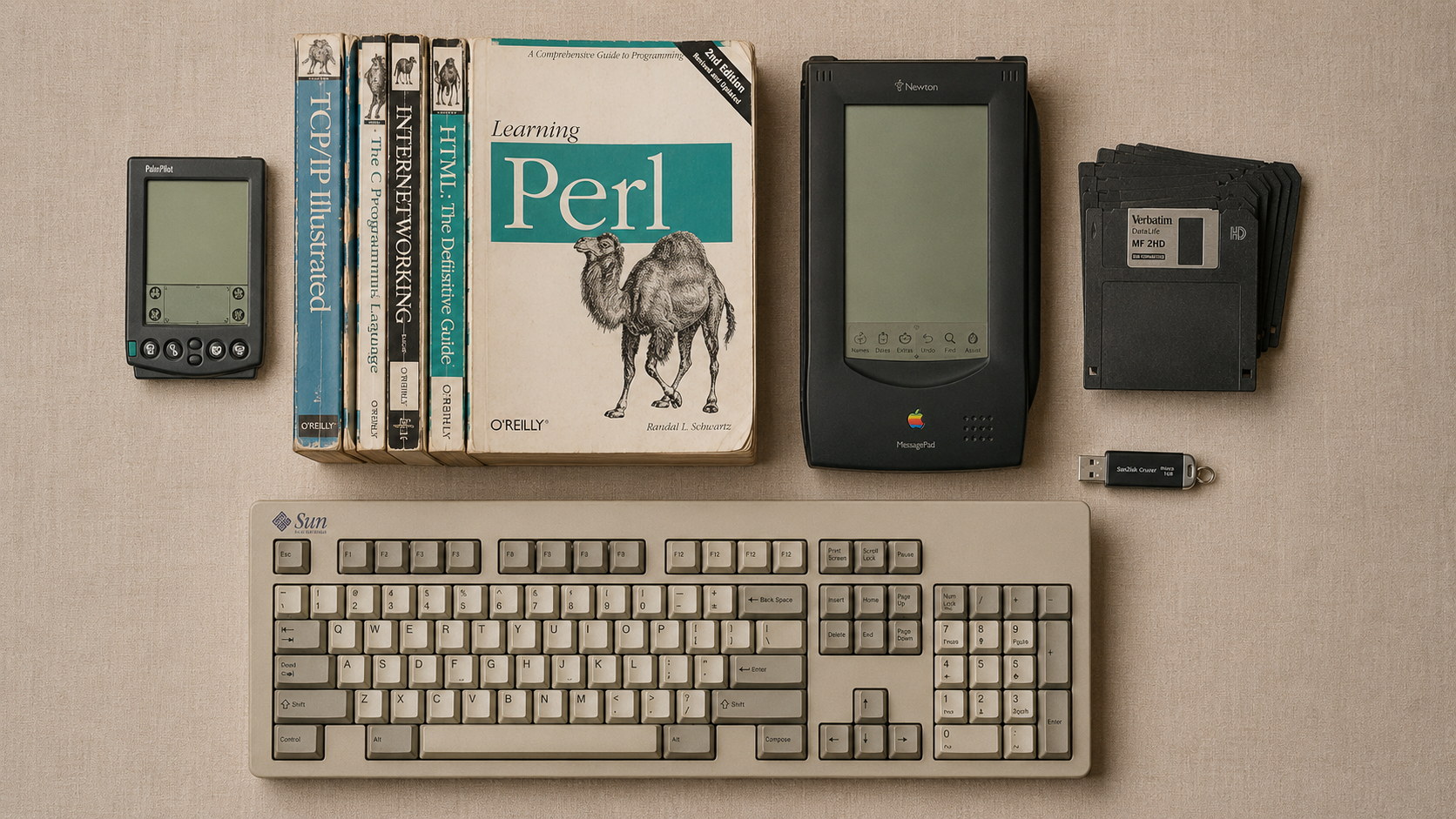
Tools change. Frameworks die. Languages eclipse each other. The hottest thing in our stack last year is a maintenance burden this year and a punchline next. Anyone who has been in this field for more than a few years has the same internal habit: assume the surface is about to move, and let the part you actually care about — the thinking, the architecture, the taste — live underneath the moving surface.
This is the part of the story I want to extend more broadly beyond tech, because I think it can be instructive. The creative world’s posture toward AI right now is largely rebellious, and the rebellion is understandable; the harms are concrete and the livelihoods at stake are not abstractions. But underneath the politics, the more useful observation is structural. The instability that has been the everyday weather of software is now coming for the rest of the creative arts. Resisting it as if it were an aberration, as if stable craft is the baseline and AI is the violation, does not prepare anyone for the shape of the next decade. What’s worth cultivating is the flexibility underneath, the kind that lets you keep being valuable when the surface moves, and then moves again next year, and again the year after that.
The same move, one industry over
Production is getting cheap in the creative arts. Not as cheap as inference in a code editor, not yet, but the trajectory is identical. The first plausible draft — of an essay, a chapter, an illustration, a marketing campaign, a song demo — is approaching free. And the tools that produce it are landing on almost everyone now, inside and outside the industry. What is not getting cheap, and what shows no real sign of getting cheap, is the judgment about which plausible draft is worth keeping, which one will withstand a knowledgeable audience, and which one is built on something true.
The architectural change is the same as in software: production cheap, judgment expensive. The blunt version of the advice that follows is: find your taste, or be swept away.
I’d like to make a more careful version of that claim, because the careful version is the interesting one — and because I don’t want the blunt version to read as callous.
The naive claim, and the truer inverse
The naive version of “find your taste” goes like this: the rare valuable person in the new world is the person who spans both disciplines — the engineer who writes well, the novelist who codes, the designer who can also illustrate, the producer who can also mix. AI rewards the polymath, and if you’re fortunate enough to be one, you’ll thrive in this new world.
That’s half right but it’s not the interesting half. Polymaths have always been valuable, and AI doesn’t change the basic shape of that advantage. The new thing is closer to the inverse. The irreducible human contribution to creative endeavors is taste — judgment, knowing-what’s-right, the ability to recognize when something works and when it’s three degrees off. Taste does not come from the model. Taste is what the person brings that the model can’t. Taste is experience across a life lived — the way relationships and hobbies and a profession, love, loss, the works, compound into a person who knows what’s right.
What’s new is that AI lets taste project across gaps in craft the person doesn’t personally span. Read that again please if it didn’t fully resonate, because it’s THE game here. The engineer who couldn’t write the prose; the writer who couldn’t hold the system architecture; the designer who couldn’t sketch what was in their head; the composer who couldn’t engineer a finished mix. Previously each of those people was blocked by a missing half. Their taste was real and trapped, because shipping anything required mastering the half they didn’t have.
AI fills in enough of the missing half that the irreducible thing — taste — gets to project at full range.
This is a different claim from “the rare person spans both fields.” It’s the claim that you don’t have to span both fields anymore for your taste to express itself across them. The model is the bridge. Taste does the steering. Craft, traditionally the gatekeeper, becomes something more like terrain — still real, still consequential, but no longer the thing that decides whether you get to make the work at all.
The bottleneck used to be craft. Increasingly it’s taste.
One consequence worth addressing: the people who feel most threatened by AI tools and the people who feel most freed by them often have similar skill levels. What differs is whether their taste already exceeded their reach. If you had taste your craft couldn’t keep up with, AI is the most liberating piece of technology you’ll touch this decade, perhaps ever. If your value was in the craft itself, untethered from a strong opinion about what should be made, the ground is moving, and not in a fun disco way.
What taste actually looks like in the work
That’s the abstract claim. It has to cash out as something a person can actually do, or it’s a vibe. “Vibe” is the right word — in the AI conversation it’s become shorthand for accepting the model’s plausible output without scrutinizing it: vibe coding, vibe writing, the comfortable surface that gives way under any real weight. This argument about AI and creativity will fail the same way if it doesn’t translate into something you can practice.
The standard complaint about AI output is that it’s smooth and empty. Fluent on the surface, generic underneath, dissolving on contact with anyone who knows the subject. The instinct is to call this a soul problem, a creativity problem, some fundamental limit of the medium. It is none of those things. It’s a statistical problem with a specific shape.
A language model trained on a vast corpus, asked to describe a “deep red,” produces something near the center of how deep reds get described. The safe move runs toward the median, and the median runs away from specificity. A good writer might already have an eyebrow raised, knowing that specificity is key. The model is optimizing for plausibility across an enormous distribution of contexts it can’t see. It’s averaging. A knowing human, asked to name the deep red, says oxblood, or the red of the inside of a beet two hours after it’s been cut, or a gruesome murder scene. Each of those is wrong somewhere — out of register for some context the model is trying to be safe across — and that wrongness-somewhere is exactly what makes them right here.
So the discipline is this: in AI-assisted creative work, the human’s job is the relentless accumulation of true, scrutiny-surviving specifics that statistical smoothing can’t reach. Detail isn’t decoration on top of the work. Detail is the un-fake-able signature, the proof that a particular intelligence with particular knowledge was behind the thing.
A small example. A short story about an artisanal guitar builder will, by default, contain a workbench, some tools, a smell of wood and lacquer, and a craftsman who speaks in measured phrases. That’s the model running toward the median. The story becomes itself when the writer insists on the specific: a 1973 Martin D-28 with a hairline crack at the bridge plate that opened after the owner left it in a hot car in Phoenix; the smell of hide glue heating in a double boiler at the moment the kettle on the hot plate next to it starts whistling; the fact that a luthier will tap a top with a knuckle and tell you what wood it is before they look. Each of those is a thing a working luthier would nod at. None of them is in the median draft.

That nod is the load-bearing thing. Specificity is what survives knowledgeable scrutiny. Anything smoothed toward the average tells a reader who knows the subject that no one who knew the subject was actually present.
The discipline scales inversely with how much the AI is doing. If you’re writing every word yourself, your specificity surfaces through the natural friction of composing — you’re picking each word because you mean that word. When the model is producing the first draft, the first draft contains none of your specifics. They have to be put in deliberately, paragraph by paragraph, with the patience of someone weeding a long row. The more production the AI handles, the more relentlessly the human has to supply the specificity the work hangs on.
This is what taste looks like when it’s actually working: an insistence, held over every paragraph and every decision, that the work hold up under the eyes of someone who knows.
The same discipline in software
In case the analogy from software to art seems too convenient, the same discipline is recognizable on the engineering side.
An AI-assisted engineer can ship a CRUD endpoint in twenty minutes. The endpoint will be plausible. It will compile, run, and pass the obvious tests. It will also, often, contain the median version of every choice: the median way to handle pagination, the median error response shape, the median naming convention, the median assumptions about the data. Each of those is fine in isolation and degrading at scale. A system built entirely from median choices is a system no one with strong opinions about it would have built. Yet it may work fine in some circumstances, that’s the rub.
The engineer’s job is increasingly the specific deviations from the median. The decision to make this endpoint idempotent because of how the production clients actually retry. The decision to surface this particular error class with a custom code, because three downstream services need to distinguish it from its neighbors. The decision to name this field after the domain language the team uses in standups, not the generic name the model offered. None of those decisions is the model’s. All of them are taste, applied as specificity, at the seams where the code meets the rest of the system.
The engineer who can hold a system in their head and notice every place the model produced a competent stranger’s version of a decision — that engineer is becoming more valuable, not less. The engineer who could only produce competent strangers’ versions is in trouble.
The honest caution
Soullessness is the first risk people name with AI-assisted work, and the specificity discipline addresses it directly: if you do the work of inserting the true, hard-won specifics, the output stops being generic. That one has a known answer.
The harder risk doesn’t, and it’s the part I’m least sure about.
Production efficiency tempts scale. If an essay used to take a week and now takes two days, the impulse is to write three essays instead of one. If a feature used to take a sprint and now takes two days, the impulse is to ship three features instead of one. The math is hard to argue with on the production side. The problem is that judgment doesn’t scale at the same rate.
An architect can hold one system in working memory. Two, with effort. Eight is comedy. A novelist can hold one long book in their head with the intimacy that lands the right specifics on the right page. Two, maybe. Five is fantasy. Taste is a slow-moving resource. It’s built through years of looking at the work, knowing what’s true in the domain, having opinions that survive contact with practitioners. It doesn’t speed up because the production tools sped up.
The honest version of the bottleneck-has-moved claim has to include this. The model works exactly as well as the human’s judgment scales, and human judgment is the irreducibly slow part. If we let production efficiency pull us into building more than judgment can steward, we’ll produce a great deal of work that looks fine and doesn’t hold up. It won’t fail loudly. It will fail in the way median work always fails — by not being remarkable, by not being remembered, by dissolving on contact with the people who would have cared.
That is the worst-case future of the cheap-production era: an enormous volume of competent strangers’ work, produced by people who had genuine taste and stretched it too thin.
Where this lands
Two things are happening at once.
The bottleneck moved. Craft was the gate for a long time, and the gate is opening. People whose taste exceeded their reach are getting to do work they could not have done before, and some of that work will be better than work produced by people whose craft never had to be steered by a strong opinion. That’s not a small change. It’s the most interesting thing happening in creative tools in most of our working lifetimes.
And: the discipline that meets the new bottleneck is the specific over the average. The taste that bridges craft gaps has to be paid out in detail-by-detail insistence, paragraph by paragraph, decision by decision, in the work itself. The model will not supply this. The model will produce the median, plausibly and quickly, and wait for the human to insist on something truer.
How far human judgment scales under the new conditions is the open question, and I don’t think it has a clean answer yet. What I know is that judgment doesn’t scale as fast as generation does, and that pretending otherwise will be the characteristic mistake of the next few years.
One last thing, addressed sideways to the creatives reading this who are still in rebellion. The instability you are feeling now — the sense that something you trained for your whole career has been moved without your consent — is, in software, the baseline weather. We don’t enjoy it either. But we have learned to put our defenses around the judgment underneath rather than the surface we happen to be standing on this year. That judgment is what stays useful as the surfaces keep moving.
Find your taste, then. Pay it out in specifics. Don’t let the cheap production talk you into making more than your judgment can hold. And remember that the version of the craft you’re being asked to defend right now is going to look outdated by the time you’ve finished defending it.
The bottleneck moved. The discipline didn’t.
Want more like this?
Subscribe to get new posts from the lab delivered to your inbox.
or grab the RSS feed