
Becoming Gnarly
June 2, 2026 · by Michael Morrison · 12 min read
The through-line under everything else here — the essays, the software, the games, the bees, the skate ramps. A case for choosing the harder path when the harder path is the one worth taking, and the harder skill of telling which paths those are.
I keep bees, I ride skateboards on ramps, I’ve written a lot of technical books, and I build software and games for a living. On a site that asks you to take all of that in at once, the reasonable question is what any of it has to do with the rest. The honest answer is that they’re the same decision made over and over in different spaces. I tend to pick the harder way to do a thing, and I’ve done it on purpose for long enough that it stopped being a series of choices and turned into a disposition. This is an essay that acknowledges the disposition, because everything else here is downstream of it.
The word I use for it is gnarly, which needs some defending, because to most people it lands as a surf-and-skate cartoon — a guy in board shorts, a turtle in sunglasses, a shaka hand sign. But the word has a second life the cartoon buried. A tree grows gnarled because it grew somewhere hard: wind, rock, exposure, a hundred seasons of not-quite-enough. The gnarl is the record of the struggle, and it’s also the reason the wood is strong and worth looking at. Smooth wood is young wood. The two meanings — gnarly the difficult, dangerous thing, and gnarled the weathered thing with character — are the same idea caught at opposite ends of a process. The difficulty going in is what produces the character coming out. That’s the whole thesis. The rest of this is me refusing to let it slip into being a fridge magnet.
The phrase itself, becoming gnarly, came out of a conversation about skateboarding with a close friend, and the grammar is the part I’d defend hardest. Not be gnarly. Not get gnarly. Becoming. You don’t arrive. In skateboarding there’s always a gnarlier line — a bigger gap, a taller wall, a scary trick that’s been made to look easy by everyone better than you. So the horizon keeps moving exactly as fast as you do. That sounds discouraging and is in fact the opposite. It means the thing can point a whole life in a direction without ever turning into a finish line you fail to cross. Chest-thumping needs an arrival. Becoming refuses one. It’s the most honest verb I know for a value, because it admits up front that you’ll die mid-sentence.
The receipts
A guy telling you to choose the hard path should have chosen a few, so here are mine. At seventeen I picked electrical engineering as my way into computers, and I picked it substantially because it was the hardest road to where I already knew I was going. I was right that it was the hardest — not kidding, I still occasionally have nightmares about exam failures, there were many. I’ve been collecting that kind of evidence ever since: forty-seven books written in the margins of a working life, a studio’s worth of products run by one person, and a stubborn habit of doing things myself well past the point where any efficient person would have hired it out. I am DIY to a fault. And I mean to a fault, because that phrase is going to matter shortly.
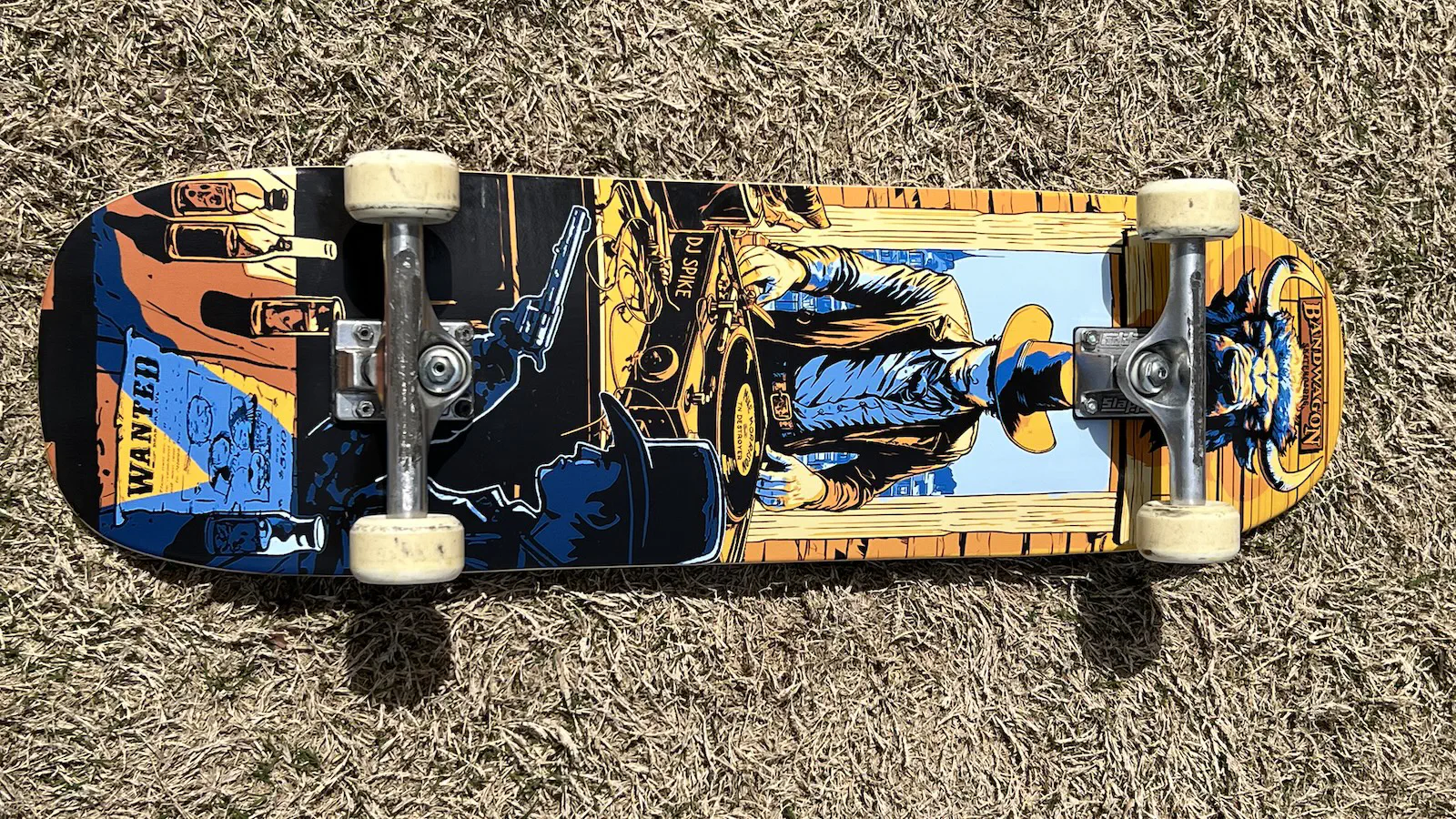
I have the literal version too. I’ve skateboarded long enough to have collected the surgeries and the scars that come with it, and somewhere along the way I came to prefer a scar to a tattoo — not as a rule for anyone, just as my own taste. A tattoo is a mark you have applied to mean something. A scar is one that got applied to you, against your will, by something that cost you. You don’t pick the design, the fall does. I even have a skateboard with my name on it — a “bro model,” which in skating is the affectionate joke grade between amateur and pro, the board they make for the guy who is emphatically not pro but earned the ribbing. That’s about the right altitude for all of this. Enough to have paid for the opinion. Not so much that I’d ever claim to have arrived. Becoming, not become or became.
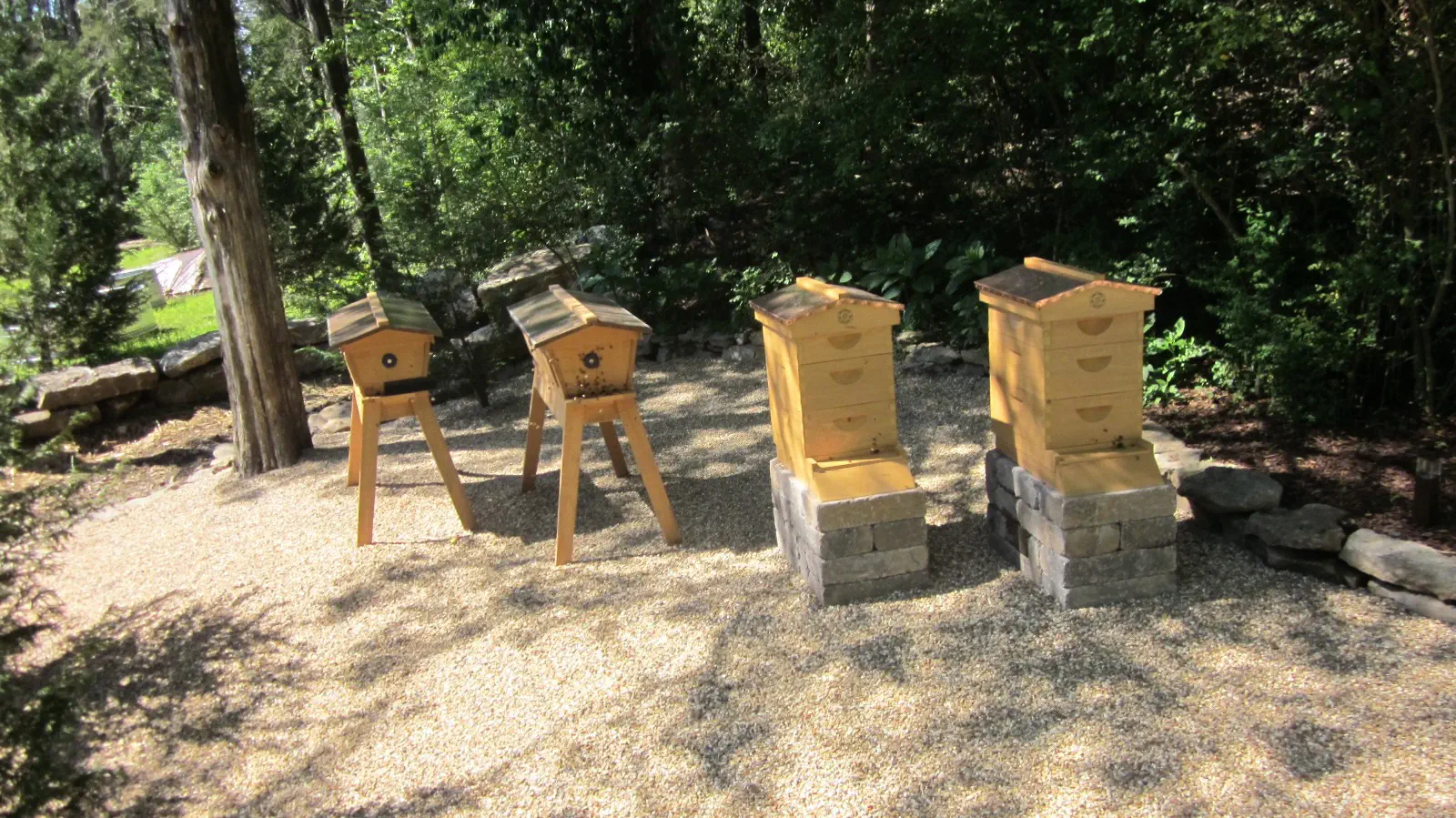
Which is also, for the record, how I came to keep bees. In the things I do — skateboarding, mountain biking, the activities where gravity and the ground get to vote — injury is common enough that we have a name for what you take up while you heal: an injury hobby. A slam wrecked my shoulder badly enough to need surgery and a nine-month recovery, and nine months is a long time to sit still, so I went looking for somewhere to put the sidelined attention. Beekeeping sounded good, so I dove in. That’s the whole mechanism, and it’s gnarly all the way down: the hard thing hurts you, and instead of resting you go find another hard thing to be a beginner at. The bees in the backyard and the scars from the ramp are the same story — one’s just what I did while the other healed.
There’s an upside to being a beginner that I didn’t expect and now hunt for on purpose. The obvious half is humility, getting ego checked, and that’s real. The half nobody mentions is that mastery levies a tax: once you’re good, the freshness drains out and the work turns to maintenance and small increments. Starting over somewhere new refunds it — you get to be bad again, which is the only way to learn again in that steep, total way that only happens at the start. The price is an ego hit most people won’t pay, especially in public. At thirty I took up ice hockey: a near-pro-level skateboarder stumbling around the rink like he was trying to play basketball without knowing how to run, getting the puck poked off his stick by ten-year-olds. I loved it without reservation, exactly because I was terrible and there was that much open road ahead. Becoming, again — same verb.
Not long ago a surgeon went into my knee to fish out a loose body — a chip off my own kneecap that, his best guess, had been drifting around in there for years before it finally started to bite. He was trying to work out what set it loose, so he asked what I get up to. The skateboarding earned a raised eyebrow. But it was the fixed-gear bike that stopped him — I was midway through explaining how a fixie fights you on a descent, no freewheel, your legs braking against the cranks the whole way down a hill, when he just cut in: “Why?” Not the knee mechanics. Why ride that bike at all. I sat there a second and said, “Good question.” I didn’t have the answer loaded, and the not-having-it nagged at me a lot longer than the knee did. Most of what follows is me, belatedly, trying to give him one.
The claim, plainly
Most things worth having are earned through real effort, and the effort isn’t a tax on the having; it’s frequently part of the having. The struggle to assemble a thing is a lot of why the thing ends up yours. This is old and unglamorous and some version of it came from your grandmother, or maybe her grandmother. The reason it’s worth saying again, now, is that we’re living through the largest effort-removal project in human history, and “no pain, no gain” is too dumb a slogan to survive contact with it. It has to get smarter, fast, or we’ll automate away things we didn’t know we were keeping.
Because here’s the part the gym-poster version gets wrong, and the part I most want you to take with you: not all friction is formative. Some struggle builds you and some struggle just costs you, and the entire skill — the actual discipline this whole publication is about — is telling the two apart. A hard route up a rock face makes you a climber. A bad line at the DMV makes you nothing but late. Treating all difficulty as virtuous is how you end up romanticizing inconvenience, and that isn’t a philosophy, it’s a martyr complex with a podcast. The point was never the suffering. The point is the specific, chosen difficulty that runs along the grain of what you’re trying to become. Everything else is just friction, and friction with no formation in it is precisely what tools are for removing.
Which is the honest reason I’m not against tools, and why the essays that follow this one spend most of their time using the most powerful ones I’ve ever had. The line that matters isn’t human-versus-machine. It’s whether the difficulty you’re handing off was a means or an end. Delegate a means and you free yourself for the thing the means was always in service of. Delegate an end — automate the part that was the point — and you’ve deleted the thing while keeping its packaging. There is, I’m convinced, such a thing as a tool that performs your life on your behalf while you stand next to it and watch, and I’ll make that case at unreasonable length in the next essay. For now the principle is enough: keep the friction that forms you, shed the friction that only bills you, and accept that the work is knowing which is which — work that never fully resolves, which is the point.
The thing I can’t stop noticing
For most of history the central human difficulty was survival, and most of the species spent most of its effort on it. We have, for a meaningful slice of the world, largely solved that. And the people with the fewest imposed hardships turn out to be the ones reaching hardest for ever-more convenience — sanding away frictions so small we had to coin “first-world problems” to laugh at ourselves for minding them. I don’t think that’s decadence, exactly. I think it’s a muscle that doesn’t know what to do now that the thing it was built to push against is gone. We got the hardship removed and found we didn’t feel better, because some meaningful amount of who we are was assembled in the pushing. We were built to struggle.
Two things keep that observation from curdling into a lecture, and I hold to both hard.
First, this is about chosen difficulty, and I won’t romanticize the imposed kind. Hardship that picks you — poverty, illness, grief, the struggles nobody volunteered for — is not a growth opportunity, and telling someone in the middle of one that the friction is good for them is obscene. The entire value here lives in the choosing. Strip out the choice and it’s just suffering, and I have nothing to sell about suffering.
Second, which difficulties are worth choosing is radically personal, and I’m not handing out a list. Using a dishwasher is not a moral failure. I’m not going to grind my own flour to prove a point, and the fact that I’ll happily spend literally years to use hand tools to cut neighborhood mountain bike trails while ordering pizza delivered trailside so I don’t have to stop is not a contradiction — it’s the entire idea. You pick your hard things. The argument was never that you must suffer here rather than there. It’s only that there’s real value available in the struggle, that the value is easy to automate away by accident, and that it’s worth choosing some of it on purpose before the choosing gets done for you.
Why these essays sit together
That’s the through-line, and it’s why the writing here belongs in one place even when it doesn’t look like it. The essays I’m publishing first happen to be about making things in the AI era, because that’s the hard road in front of me right now and the one where the lines are being redrawn fastest. But the subject was never AI. AI is just the most dramatic instance, this decade, of the only question I find genuinely interesting: what’s worth doing the hard way, and how do you tell. Underneath the software and the studio talk, every one of these is an argument about which struggles to keep.
Here’s the moment that taught me what the word means, better than any intimidating trick I’ve fought to land on a board. A few of us were skating a deep concrete bowl at a public park, all of us decades in, fluent the way you only get from a lifetime of slams. A greenway loops that park, close enough that you hear the runners. We’d been clocking the same woman for weeks — heavyset, barely running, a pace most people would call a fast walk, but out there every time, in public, doing the work at the stage where it’s hardest and pays back the least. One afternoon I nodded at her and said, “that’s so much fucking gnarlier than anything we do.” Nobody laughed. It wasn’t a joke and they knew it. The bowl is a toy I’ve had thirty years to get easy in; what she was doing took a courage none of us were spending. I don’t know if she ever clocked the ragtag crew of overage skaters quietly in her corner, but I like to think being her cosmic fan club for a season counted for something.
I don’t expect to finish becoming gnarly. The process guarantees I won’t. The tree never stops being shaped by the weather. The line is always a little past where you are. You choose the next hard thing, you pay for it, you carry the mark, and you go looking for the one after that. The hard way isn’t always right. But often enough to organize a life around, it’s where the good stuff turns out to have been hiding.
So, welcome. Take the harder path when it’s the one worth taking. The rest of this is just me trying to work out which ones those are.
Want more like this?
Subscribe to get new posts from the lab delivered to your inbox.
or grab the RSS feed