
Again, Funnier
I've made Rick Rubin the hero of three essays without once stress-testing him. Strip the reverence off his method and it's a guy in a room saying "again" until it lands. So was the marketing director who did it to my friend Terry. So am I, at an AI prompt, all day.
I contradicted myself in public six weeks ago and nobody caught it, including me.
The Gate Was the Product sorted the creative world’s gatekeepers into two kinds: tollbooths charging rent on access, and forges producing something of real value. The real thing, I wrote, was earned judgment, “the formation that only comes from doing the thing badly for years until you could do it well.” Two paragraphs later I wrote that the cleanest example of taste is “the one that looks least like craft,” and then I pointed at Rick Rubin, who has said of himself that he has no technical ability and knows nothing about music.
I said, “…only comes from doing.” Then introduced a man who mostly didn’t.
(The original sentence reads usually now. I patched the word as soon as I saw the problem. This essay is the part a patch can’t reach.)
I hedged in the moment, too. Looks least like craft, I wrote. I’ve now leaned on Rubin in three separate essays, load-bearing each time, and never once put weight on him to see if he’d hold. I’m not a superfan and I’ve never met the man; his story just keeps being the cleanest specimen of how tangled craft and taste can get. This is that.
What he actually is
This is worth getting right, because I got it a little wrong the first three times and had to go back and patch it.
Rick Rubin is a legendary music producer who co-founded Def Jam Recordings with Russell Simmons, brother of Joseph “Run” Simmons of Run-DMC fame. Rubin played guitar for about five years. He started a band called Hose as a freshman at NYU in 1981, toured, shared bills with Hüsker Dü and the Meat Puppets and the Circle Jerks, and a Hose track was the first thing Def Jam ever released. The band ended in 1986. He calls his own playing rudimentary. And even as a producer he doesn’t run the board, and he’ll tell you so before you can ask.
So he’s not a man who arrived out of nowhere with an ear. He put records out and figured out what worked. Five years of that is not nothing, and I’d been quoting his modesty as though it were a biography.
But the thing I built on him still stands, because it was never really about whether he could play. In 1986 The Cult had finished an album, the successor to their 1985 breakout Love. The album was paid for, done, and they’d soured on it themselves. “Soup,” singer Ian Astbury called it: several hundred thousand dollars of polished post-goth gloss. They hired Rubin to remix one of the tracks. He heard past the finished object to the record underneath, and the potential he heard was nothing like the band’s own sound: stripped to the studs, closer to AC/DC and early Zeppelin than to anything they’d ever made. He asked if they’d be open to re-recording the entire album that way. He reportedly got them on board with a challenge: “Do you guys wanna make English pussy music, or do you want to rock?” He couldn’t have played a note of either version of that record, yet he knew which one was right, at a level the band itself couldn’t yet see. The re-cut became Electric, and it’s the record people remember.
That’s the move. That’s what I’ve been calling the forge.
Again
Strip the reverence off that method and it’s a guy in a room saying again until it lands. In the software world we call it iterating, and it was a thing long before AI entered the picture. You get the code barely working, then another pass to make it solid, then another to clean up the cruft. From inside the studio control booth the word is just again.
That’s the technique. It’s also, precisely, what I now do at an AI prompt on a Tuesday afternoon — read the output, feel the wrongness, say some version of again, and keep going until the thing in front of me matches the thing in my head. Same loop. Same posture. Same guy in the room with an opinion and in many cases a limited ability to execute it himself.
If the difference between those two situations were the quality of the ear, I’d be comfortable, because I’d lose that comparison cleanly and go home. The difference isn’t the ear. It’s what the again lands on.
Rubin’s lands on The Cult. On a band that had already gotten sick of its own record, which means they brought the dissatisfaction into the room with them. Years later it lands on Johnny Cash, sixty-one and written off by Nashville when Rubin sought him out backstage at a California club show in 1993. The pitch was almost nothing: sit in my living room with a guitar and sing everything you love. Out of those sessions came American Recordings and the five albums after it — the final act that won Cash Grammys, gave him “Hurt,” and put him in front of a generation that had never bought a country record. On those records it lands on the band behind him, guys who get bored and argue and misread a note in a direction nobody planned, and on Cash himself, who can turn around at some point and say that’s it, don’t touch it, and be believed. Rubin’s judgment was never a solo instrument. It was one half of an argument, and the other half had taste and standing and the ability to walk out.
Point the same again at something that agrees with every note and there’s nothing on the other end. The again is a mild form of conflict, a way of forcing another try to see what might shake out.
Here’s the small mechanical fact underneath it. Again has no stopping rule built in.
A person supplies one by refusing. There’s a take where the drummer puts his sticks down and just says he’s done. There’s a draft where the writer says this is the one, and means it, and won’t do another. That refusal isn’t defiance or obstruction. It’s information — the only information that ever tells you where the ceiling was.
A model will hand me the eleventh pass as agreeably as the first, and won’t tire of it. The twelfth too, and be just as perky going into the thirteenth. The loop ends when I decide the thing matches, or when I get tired, and being tired is not a quality signal, it’s a blood sugar reading.
There’s a claim sitting nearby that I believe is false, and it would be convenient for me: that you can’t judge done without having made. Rubin dents that argument. Pauline Kael breaks it outright: she reviewed films for The New Yorker for more than two decades, feared by half of Hollywood, and she never made a single film of her own. Her judgment was better than almost every director she wrote about. Making is not a prerequisite for taste. Whatever’s going on, that isn’t it.
But notice what Kael was never in a position to do. She could tell you the picture was bad. She was never standing in a room saying again to a director with the film still open. She tried the other side exactly once — Warren Beatty lured her to Paramount in 1979 to make pictures instead of judging them — and within a year she was back at her desk. Judging the finished thing and steering the unfinished one turn out to be different muscles, and the second is a craft of its own, with its own formation: it’s what good editors and producers and coaches spend their careers building. You can have an extraordinary amount of the first and almost none of the second.
So what builds the second one?
Forks
Not chops. Rubin proves you can steer a record you can’t play a note of, and Kael proves consumption isn’t sufficient — there are hardcore fans who have heard more music than Rubin has, and it buys them nothing operational. The superfan sees only surviving choices. Every finished record is the last one standing out of ten thousand invisible decisions, and the listener gets the survivor and never the forks in the road that led to it.
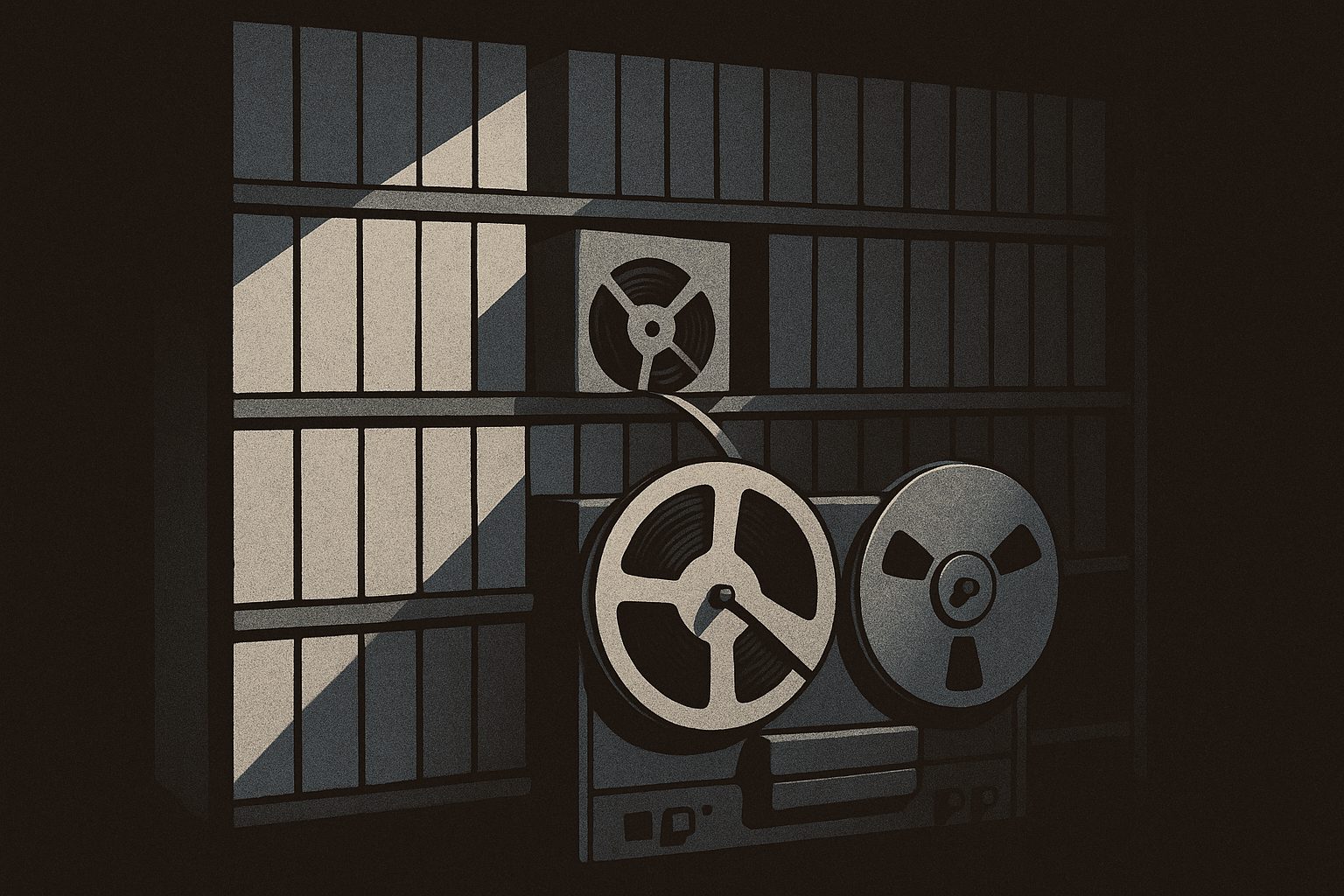 The survivor is on the machine. The forks stayed on the shelf.
What Rubin got, sitting in those rooms, was the fork and the outcome. He chose take four over take seven, and then he found out what happened next: the record shipped, or it didn’t, sold or died, aged well or curdled. He got to find out if take four really was better than take seven, judged by people with no stake in agreeing with him. Every one of those findings is a calibration event. That’s the supply line.
The steering muscle is built by exposure to the counterfactual, with consequences attached. Witnessing failure is a requirement.
Making things is just the cheapest and most common way to get near forks — you build the bad version first and then live with it for a while. It isn’t the only way. The studio is another. Editing is another. I wrote about a version of this in You Can’t Relic a Life without realizing what I had: George Jones was too deep in the bottle to get through “He Stopped Loving Her Today” — he kept drifting the lyric onto the melody of “Help Me Make It Through the Night” — and producer Billy Sherrill kept sending him back, across sessions that stretched the better part of a year, until they caught him at the right moment. Jones told Sherrill, “Nobody’ll buy that morbid son of a bitch.” It went to number one, won nearly everything a country song can win, and rescued his career. Somebody in that room was saying again. Somebody else was the reason it eventually stopped.
Big T
My friend Terry Lancaster — Big T, from the years we played hockey together — had the blog contract for a car dealership. Good gig, ran a while. Then the marketing director started sending him drafts and asking what he thought of them.
Terry’s first reaction, and I love this, was: I don’t remember writing these, but they sure sound like me. His second reaction was that the guy must have trained something on his archive.
Neither. The director had just kept re-prompting the machine: again, funnier. Again, more like the thing I already like. He ran the loop until the output landed where Terry had been standing for two years, and then he had it. Terry’s contract was cancelled about three weeks later.
Here’s the rub. The director was not a fool and he was not a villain. He recognized that Terry was funny — that’s real judgment, and a lot of people who hire writers don’t have it. He knew the target well enough to know when he’d hit it. So the guy had taste.
But recognizing that Terry was funny is judging a survivor. He’d read two years of finished posts but he’d never worked through the edits that actually got Terry to funny. He had never once watched one of Terry’s jokes die on the page and get replaced by a better one, because that happened in a room he wasn’t in, at a desk he’d never sat at. Recognition without calibration. And I can’t tell you he steered badly. I never read what the loop produced, and maybe his ear was enough. What I know is that funny was something he wanted to buy, Terry was the price until a cheaper supplier turned up, and after that, draft by draft, the only judge of whether the jokes still landed was the same ear running the prompts.
I can’t draw a clean line from him to me and my AI prompt. He had a good ear and no forks. I have a good ear and forks that are getting cheaper by the month.
Four weeks ago, in The Intimacy Economy, I put myself in that marketing director’s chair. I said I couldn’t have done bedtime stories for my Sojourn app justice as a fiction writer, that my contribution was the ear, and that I liked to think I’d brought a much smaller version of the same thing to short-form fiction.
I wrote that approvingly. It read to me at the time like an honest, modest accounting of a real division of labor.
Run it through what I just built. I have the recognition. But I do not have a counterparty, no other half of the argument. Sojourn’s model does not sour on a draft finished yesterday. It does not come back with the thing nobody asked for, or the take that bores everyone, or the one you can’t put down. It has never once said that’s it, don’t touch it, and it never will, because there is no it for it to have.
I do throw things away, often. I retired a feature I liked. I killed a flip I’d been proud of for a week. I’ve had stories that just never worked so I parked them, possibly indefinitely. But every one of those refusals came from me, which is exactly the part a counterparty gives you for free — and the part you can’t audit, because the same judgment that made the call is the only judgment available to review it.
I also have something the loop can’t manufacture: six million words of shipped work behind the ear, most of it edited by professionals, some of it wrong in ways I found out about. That’s forks with outcomes. That may be the entire difference between me and someone who has only ever recognized good work in other people. It’s also, if The Forge Was a Side Effect is right, a supply line that’s closing.
The model hands me the counterfactual for free. Regenerate, and there are variants without end — more forks in an afternoon than Rubin saw in a decade of studios.
So by my own mechanism, this should be building taste faster than the studio ever did. And I actually think it might be.
Except the variants resolve against nothing. Rubin’s forks weren’t audited one by one either; the world only ever heard the survivor. But the room argued over every take while it was still open, and there were few enough of them that the record’s verdict reached back and touched each choice inside it. Mine are now settled by me, in the moment, according to what I already think, and then the alternatives evaporate and I never learn whether I was right. Exposure to the counterfactual with the calibration stripped out. A thousand doors, all of them opening onto my own preference.
The world does still answer me, at the macro level. Essays go out every week and readers write back. Apps ship and sell, or ship and stall. Whole careers of feedback keep arriving. What never gets settled is the take: this variant over that one, forty times a day, judged in private by the only ear in the room. The world audits my survivors. Nobody audits my forks; there are too many now for any verdict to reach back that far.
I don’t know how much that matters. It might be that thirty years of shipping is enough ballast to steer on for a long time. It might be that I’ve been eroding something I can’t feel eroding, which is the characteristic property of the things that erode.
Rubin can stop. He says that’s the one and a band puts their instruments down and the record exists.
I say it to a room with nobody in it.