Lounge Act
January 8, 2027
· by Michael Morrison
· 5 min read


Faith No More's cover of Dead Kennedys' Let's Lynch the Landlord was recorded in Billy Gould's bedroom with the worst gear he could find, and it swings like a cocktail band. The bass line is five notes, walked and swung, with Mike Patton crooning it like a lounge act.
It’s weirdly awesome, and nothing like what you’d expect from Faith No More covering the Dead Kennedys. A hardcore anthem about a landlord, played like a cocktail band at the end of the night, with Mike Patton doing his best lounge singer. I love it. The bass walks and swings underneath the whole thing, five notes in two bars, and it’s Patton’s second turn in this library, after Fantômas’s “Spider Baby.”
It earns its place twice over: the line is the song, and the record was made in a bedroom.
A landlord song
Dead Kennedys recorded Fresh Fruit for Rotting Vegetables in May and June of 1980 at Möbius Music in San Francisco, and Cherry Red put it out that September. It’s the record with “Holiday in Cambodia” and “California Über Alles,” and tucked on side one is a two-minute song about a landlord who raises the rent and lets the building rot, sung by Jello Biafra as a tenants’ revenge fantasy with a surf-guitar bounce under it. East Bay Ray’s guitar does the Beach Boys thing, and Klaus Flouride walks the bass under it at a sprint.
 A landlord song, San Francisco, 1980.
It’s a joke song with teeth, which is most of what Dead Kennedys were. The walk under it sounds like rockabilly to me, and what Faith No More did, twelve years later, was slow that walk down until it swung.
Virus 100
Alternative Tentacles was Biafra’s label, and in 1992 it reached its hundredth release. The label marked it with a tribute to itself: Virus 100, fifteen Dead Kennedys songs covered by sixteen acts, most of them from the label’s own roster. Two of the sixteen picked “Let’s Lynch the Landlord”: L7, and Faith No More. The way the band’s own historians tell it, Biafra asked Faith No More for the song himself. He and Billy Gould had been bandmates, briefly, in the early days of Brujeria, the masked Mexican death-metal band whose singles went out on Alternative Tentacles, so the label boss and the bassist already knew each other from a stranger project than this one.
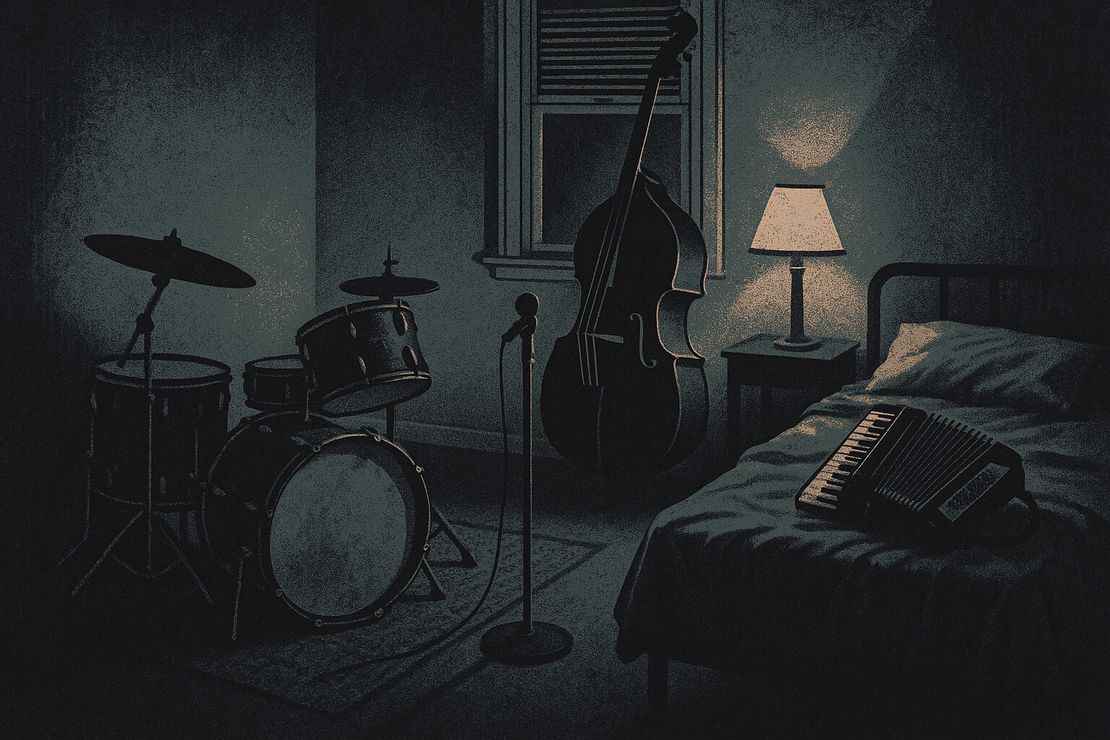
Faith No More in 1992 were about to put out Angel Dust, the record where they stopped sounding like the band that had a hit with “Epic,” and they were in a lounge mood that year. The same sessions produced their cover of the Commodores’ “Easy,” played straight, which came out that December and became their best-selling single. The Landlord cover is the cheap, mean version of the same idea. Billy Gould told Billboard in 1993 that the song “was recorded in my bedroom.” He got the worst drum set he could find, had a stand-up bass and an accordion in the room, used the worst microphone, and that was the session. What came out is a slow, swung barroom number, Roddy Bottum’s accordion wheezing behind it, Patton crooning like a man in a white tux at a Reno lounge.
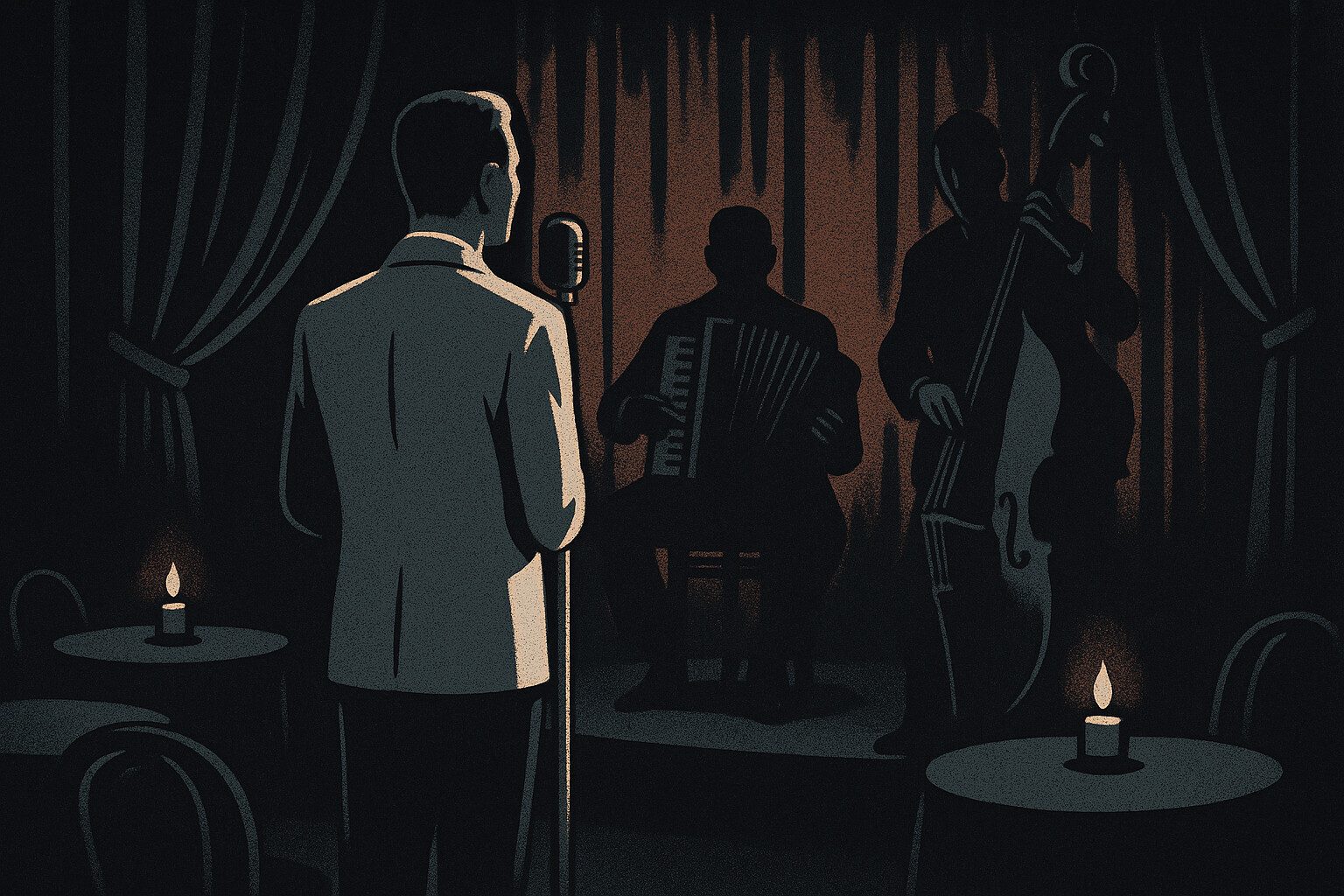 A hardcore song, played like a cocktail band at the end of the night.
For a bedroom recording it’s had a long life: a B-side that August, an EP the next year, the bonus disc of the Angel Dust reissue decades later.
The stand-up bass is the detail I keep turning over. Gould mentions it as part of the furniture, and the line on the record has the woody, thumping quality an upright gives you. I can’t prove it’s the bass you hear. But if you have an acoustic bass tone available, reach for it, because that’s what the record sounds like, whatever it was played on.
The line
Learning to count in threes
Five notes, no shifts: the hands had nothing to complain about. What I couldn’t do was make it swing. Played straight it sounded like a scale out for a walk. The record lurches, long-short, long-short, like a cocktail trio at the end of the night.
The notation had been telling me all along. There’s a little 3 over each pair of notes, and I took it for a mistake until I counted it out and found the long-short written right there. Doo-ba, doo-ba. Say it along with the record and the shuffle gets into your hand, and then the five notes take care of themselves, because they never leave the position. The one note that fights you is the lowest one, the open string at the bottom of the walk. Lifting a finger won’t stop it; you have to touch the string. Swing turns out to be as much about where the notes stop as where they land.
The uke bass and the upright
This one suits the Fullerton better than you’d think. Its stock roundwounds are brighter than anything on an upright, but the short scale keeps the decay quick, and a quick decay is half of what an upright gives you. With a pluck near the end of the neck, the flat of the finger rather than the tip, and the tone rolled off to take the shine away, the uke bass does a passable impression of a stand-up in a bedroom. It won’t fool anyone. It gets closer than it should.
A punk band wrote the song as a joke, and a band that was kidding played it like they meant it. There’s a stand-up bass leaning against a bedroom wall in this story, and I still don’t know if it’s the one I’m hearing. Doo-ba, doo-ba. Five notes and a feel I had to borrow from a lounge act in a bedroom.