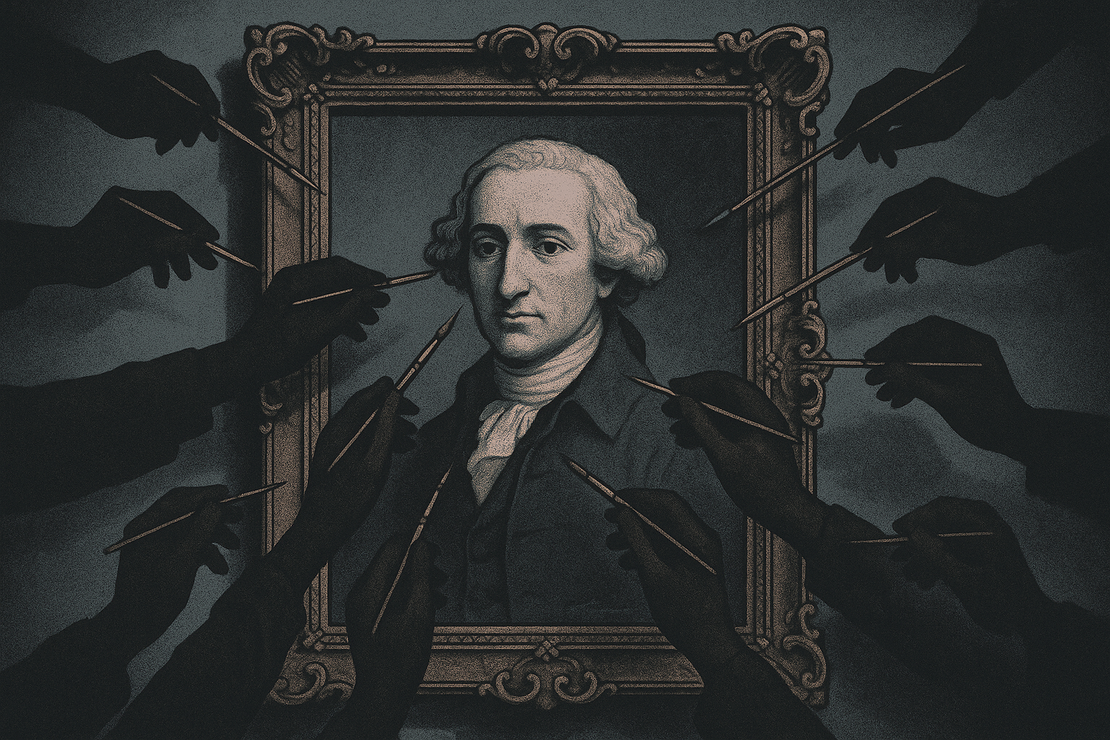
The Hand Was Never the Point
The art world, supposedly the temple of the artist's hand, abandoned the hand four centuries ago and called it genius. Many hands and one name, the arrangement everyone fears in AI, is the oldest move in fine art.
Walk through the Louvre and you can stand in front of a Rubens that Rubens barely touched.
Despite a shared affinity for facial hair, that’s Peter Paul Rubens, the seventeenth-century Flemish Baroque master — not Rick Rubin, the hip-hop tastemaker.
The big commissions came out of a workshop: a floor of trained hands in Antwerp, one specialist for drapery, another who painted nothing but animals. Rubens drew the design and priced each canvas by how much of his own brush you wanted in it; on plenty of them he laid in only the final passes, over a picture other people had already built. Four centuries later it hangs as a masterpiece and the workshop is a footnote. Every scholar knows. The name on the wall never wavered.
Hold onto that, because the art world is supposed to be the one place the artist’s hand is holy: the temple of the original, the autograph, the surface a maker, a master, actually touched. It’s why you can buy a poster of Klimt’s The Kiss at Target for $10 while the original is considered priceless and hangs in a museum in Vienna. And yet somehow that same art world decided, a long time ago and very quietly, that the hand was optional. It just never announced it, because saying so out loud was never in the house’s interest.
Rubens wasn’t a scandal. He was the standard, and the standard held.
The Factory
Three centuries on, Andy Warhol looked at the same arrangement and said the quiet part into a tape recorder: I want to be a machine. He said it like a man naming a goal. The Factory obliged: silkscreens pulled by assistants, Warhol sometimes not even in the building, the Marilyns and the soup cans carrying his name because the idea was his and the eye was his and the hands were staff. It worked. They hang in every museum that keeps score.
That’s where the Klimt comparison falls apart: the poster at Target copies a one-off in Vienna, while a Warhol Marilyn was one of a run, pulled through the same screen as the next one. There is no original hiding somewhere. The thing on the museum wall came off the line.
Damien Hirst made it almost a dare. His spot paintings, those tidy grids of colored dots, came off the brushes of a rotating crew, and when someone asked Hirst who did it best he named one of them, Rachel Howard — “the best person who ever painted spots for me,” better at his signature product than he was. He kept signing them. Buyers kept paying for the signature and not the wrist. Kinda hard to imagine. LeBron James doing a Mission Impossible face mask pull to reveal he’s been using basketball stunt doubles all along, and nobody flinches. And they’re better than him.
And it runs all the way to Jeff Koons, whose studio of a hundred-plus hands turns out sculpture on a system precise enough that no single person’s touch survives in the finished chrome. Four centuries, one unbroken practice: the hand handed off, the name kept, the result hung in the temple and called genius.
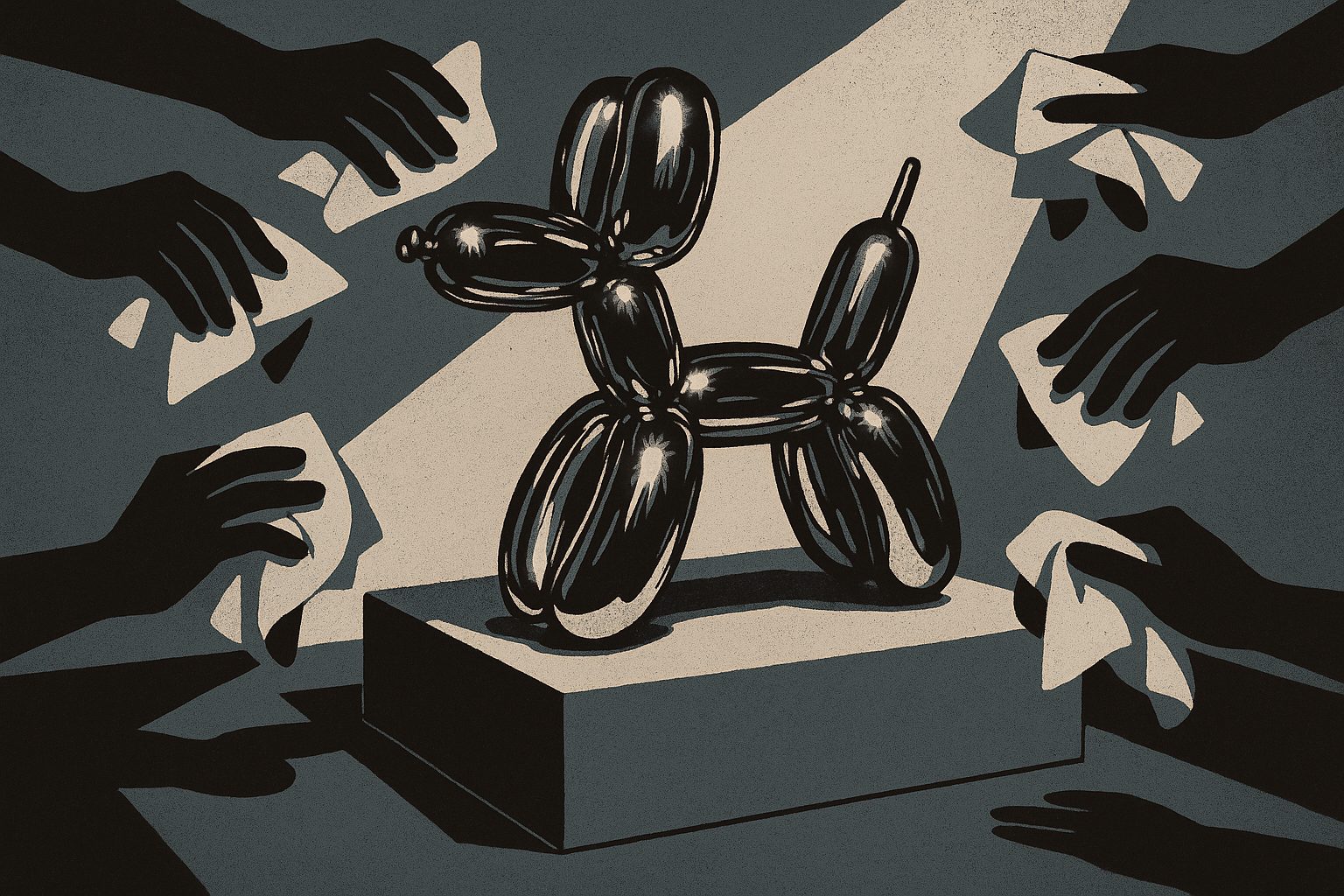 A hundred hands, one signature. The workshop we're told to fear from machines — and called genius when the name was Koons.
The room with the money in it
I’ve made the case elsewhere that authorship never lived in the manual labor — that who moved the tool was always the wrong thing to count. I’m not going to relitigate that argument here. Instead I want to peek into the room that argument didn’t enter: the one where the stakes run highest and the contradiction is hardest to look away from. The fine-art market, where people put their money where their taste is.
Because here is the punchline the auction house never says out loud. A workshop of anonymous hands producing work under one celebrated name is the precise thing we are now told to fear about AI — the machine making the art while the credit pools somewhere else. Fine art has run that exact model for four hundred years, in the open, at the highest prices humans pay for objects, and nobody called it fraud. They called it Christie’s.
Now weigh the money against the worry. In 2019 a stainless-steel Koons rabbit sold for ninety-one million dollars, the most ever paid at auction for the work of a living artist. Koons did not shape it with his hands, and every bidder in that room knew it. Nobody asked. Nobody knocked off a dollar. Then cross to the far end of the price scale: a traveler buys a fifteen-dollar Anthony Horowitz thriller in an airport and feels something curdle at news that the author used a model to brainstorm plot points and assist with research. Fifteen dollars, and every idea had better be human. Ninety-one million, and it doesn’t matter whose hands were in the room.
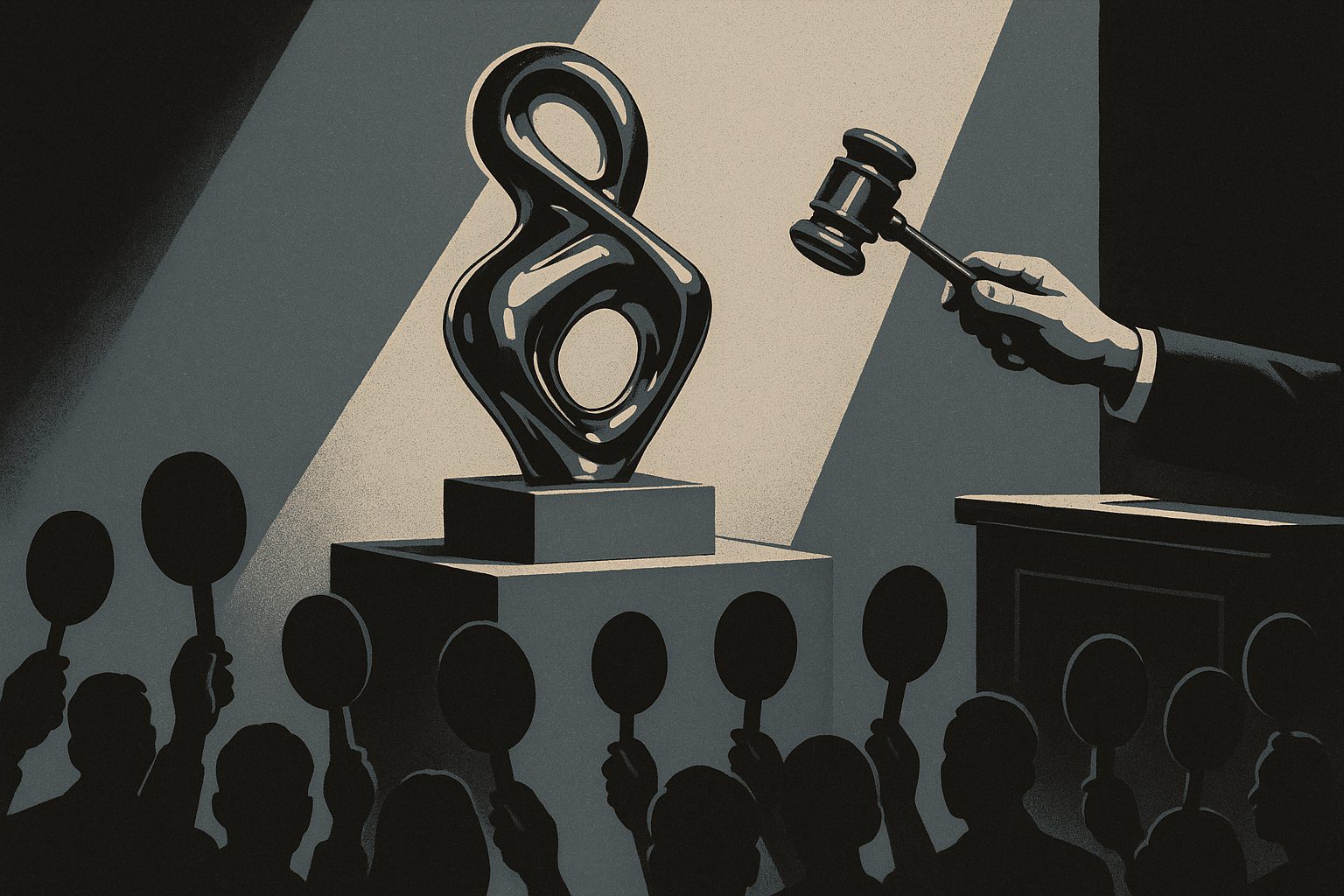 Eight figures on the block, and no one asks whose hands made it. The scrutiny is all saved for the fifteen-dollar paperback.
The scrutiny runs backward
That is the tell. If the hand were the thing we were protecting, scrutiny would climb with the stakes — pay more, demand more of the maker’s own touch. At ninety-one million dollars, you’d expect Koons to be required to create that rabbit live in your living room. But it runs backward. Whatever vanishes exactly where the stakes are highest was never what the money was for.
So the objection to AI — a human didn’t make this — is guarding something other than human hands. The art world settled the hand question centuries ago and is still cashing eight-figure checks: the touch is optional, provided the right name signs off. What the objection actually protects is the guest list — whether the name on the work is one we’ve already agreed to honor.
What’s left standing
Strip the hand away, then, and something is still standing there. Two somethings, and telling them apart is the whole of it. Sometimes what’s left is judgment: the ear, the eye, the taste no assistant and no model can hand you. It’s why Rubin makes a record he couldn’t have played himself, and the record is unmistakably his. I’ve since put that claim under load. It held.
And sometimes what’s left is only the name, renting the scarcity it arranged and charging at a gate that used to be narrow. Koons could be the first, or the second, or both on alternating Tuesdays; the hammer price can’t tell you and neither can I.
That was always the question hiding under the hand — the forge or the tollbooth. AI didn’t ask it. It only pulled the hand off the front of everything at once, fast enough that we can’t keep using the hand to duck the harder one. The machine makes the thing now. Fine. The thing it makes was never what made it worth having.