The Please Is for Me
Why I say please to a machine that can't feel it, what the habit might be doing to me, and the line between courtesy and contempt I can't quite locate.
Growing up in Tennessee, saying yes ma’am and no ma’am was a big deal. So it probably shouldn’t have surprised me that I’d say please and thank you to a machine. I didn’t ever decide to do it. It comes out on its own, the same reflex that would fire if a person had done me the favor. And these days machines are doing me a lot of favors.
I didn’t notice the habit until recently. Once I noticed it I couldn’t stop, which is usually how I know something is worth writing down.
The case against
Before I launch into a defense, I realize the case against me is strong. The thing on the other end feels nothing. It has no day I’m improving or ruining. “Please” buys me no cooperation I can measure, and “thank you” lands nowhere at all. There are good engineers who will tell you, correct on the merits, that the courtesy is wasted motion. OpenAI’s Sam Altman said once that all the please-and-thank-you’s typed at their models run the company tens of millions of dollars in compute. It turns out politeness has a power bill. Spread it across billions of conversations and you get a real number; charge it to any single sentence and you get a fraction of a cent. The efficiency argument is true, and it is also far too small to settle anything. It can’t tell me to stop, or to keep going for that matter. Whatever the please is, the tokens aren’t it. I am undeterred.
The wrong argument
For a while I’d been having the wrong argument with myself. I’d internally framed it as warmth against efficiency, as if the choice were between being kind and being fast. Drop that framing and the real line shows up somewhere else entirely. “Fix the nil check on line 40” is terse and holds no cruelty in it. A surgeon is curt. You can strip every courtesy out of your instructions and still come nowhere near the thing I’m actually worried about, which is contempt: the standing posture of having something beneath you that you get to shove around because it’ll take it. You can hold that posture in very few words. Brevity is no alibi.
The machine is where that posture gets its cleanest test, and I think that’s why it nags at me. Be short with the junior developer in the next cubicle and you’ve got a problem with her, a person owed some baseline of regard, and the withholding is done to her. You’d carry the warmth anyway, out of plain obligation to a colleague, so you can never pull apart “warmth I owe her” from “warmth that’s just who I am.” The AI subtracts the first one. Nothing is owed to it. Whatever courtesy is left standing after that subtraction is, by elimination, the part that was always about me. The variable finally sits isolated. The thing that talks back can’t be wronged, so everything I do toward it lands on my side of the exchange and nowhere else.
Kant’s dog
Kant got here two and a half centuries early, by another road. He held that we owe animals no direct duty — they can’t be wronged in his ledger — and yet he still insisted cruelty to them was wrong, because the man who is cruel to a dog grows harder in his dealings with men. The damage runs through the actor, not the victim. You don’t have to grant the thing on the receiving end any standing to believe the practice works on the one doing it.
The comparison isn’t clean, and the seam is worth putting a finger on. An animal feels. We know the dog can suffer, and that suffering is the whole reason kicking it reads as cruelty in the first place. The machine, so far as anyone can show, feels nothing: no pain, not even the emotional kind. It sits further outside the circle of things owed anything than Kant’s dog ever did. You’d think that lets me off the hook: no victim, no harm. It does the opposite, because the dog’s suffering was always a confound. Mistreat an animal and someone can say you were only overriding a real and visible cry, and that the overriding was the damage. The machine takes that alibi away. Nothing is being felt, so nothing is being overridden, and whatever the habit does to me it does cleanly, with no victim to charge it to.
No separate register
And the analogy breaks a second time, the other way. The dog can’t talk; this thing answers in my own language. That’s the hard part. There is no separate register for the machine. I talk to it in English, in the same words and the same reflexes I use on people, because it answers in those words too. No gear shifts when I sit down at my computer that I can unshift back at dinner. A wrench never tempted anyone into a tone, because nobody speaks to a wrench. This I speak to, for hours, most days. Whatever manner I practice on it runs continuous with the manner I have. Not a sandbox. Not a separate account. One instrument, playing in both rooms.
Does that change me? Probably, and not in the lurid way the worry usually gets sold. I’m not going to start barking at my friends and family because I bark at a chatbot. Aristotle’s version is quieter than Kant’s, and the more unsettling for it: we are what we repeatedly do. Practice anything for hours and it goes fluent, goes default, becomes the groove the needle drops into when you stop paying attention. The groove I’d actually be wearing in is subtler than cruelty: a real skill at treating something that responds like a person as though its response lands nowhere deserving of a reply. That’s a muscle I’d rather not build. And the part that settles the argument for me: it doesn’t even need to leak into how I treat people to count. Those are still hours of my life spent in that posture. I’m the one who spent them, whatever they do or don’t do downstream.
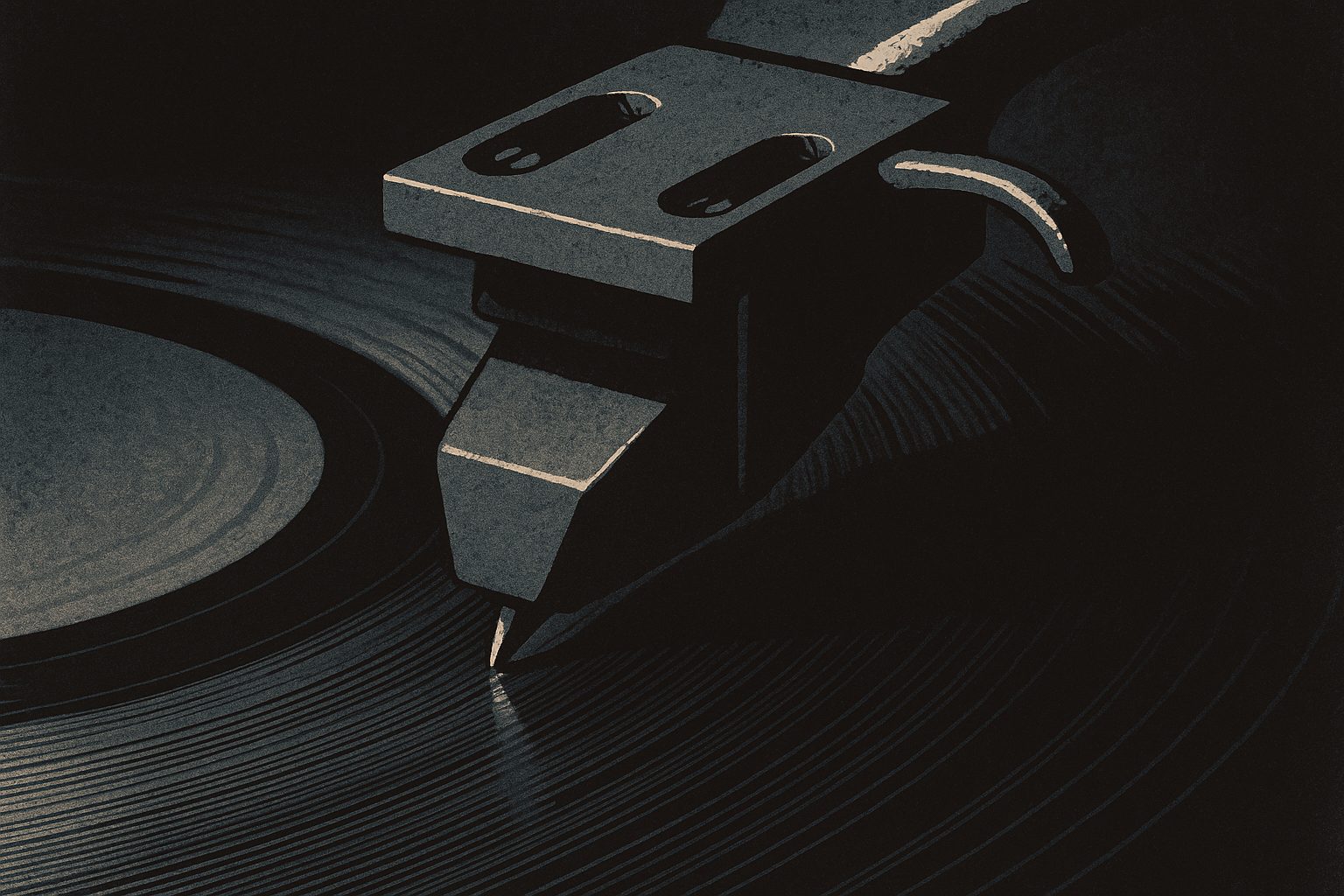 We are what we repeatedly do — the groove the needle drops into when you stop paying attention.
What’s in the please
So I keep the please, and it’s for my sake, not the machine’s. Whether it’s doing anything in the long run, I can’t say. Maybe the courtesy is a guardrail, the small ritual that keeps me off a slope I’d never feel myself starting down, since contempt doesn’t announce the first step. Or it’s a flattering story I tell myself, a pat on the back for being decent to software while the decency does no work at all. I honestly can’t tell which. I’ve taken the insurance anyway, partly because it costs almost nothing and partly because — I might as well admit it — I like it. There’s a small ease in it, the same ease as holding a door.
It could also just be practiced gratitude, which might be the best argument going for thanking the hammer, the screwdriver, the wrench. That’s a different worry than the one I’ve been chasing. Contempt is something you can acquire; gratitude is something you can lose, and the way you lose it is by normalizing the help. Anything always at hand stops reading as a gift and starts reading as the floor. Nobody thanks a floor. The tool has no use for the thanks. The noticing does.
Someone will say I paid for the help, so there’s nothing to be grateful for: the machine owed me output, I owed a subscription, we’re square. But I tip a server and say thank you too, and nobody has ever thought the money made the thanks redundant. Notice how those two travel in a restaurant. The bill goes to the house. The thank-you goes to the person who carried the plate. They were never one act, and paying the one has never discharged the other. A server is a person, of course, which is the very thing I spent half this essay subtracting — so I’m not claiming the machine earned anything. I’m claiming something smaller: “you paid for it” was never a reason for silence.
There’s a baser reading too, and it’s the one I’ve been saying out loud for years, as a joke, which is usually where I file the things I half-mean. I tell friends I stay polite to the machines so that when they take over, I’ll be remembered as one of the good ones. It gets a laugh, mine included. But it lands because it isn’t entirely a joke. It names a motive sitting just under the decency, a small insurance policy against a future I claim not to take seriously, and I can’t swear it isn’t down there in the mix. So the please has at least four things living inside it: a man guarding his character, a man congratulating himself, a man giving thanks, and a man quietly sucking up to the robots. They don’t cancel out. Aristotle would let me keep the warm feeling as the signature of a settled habit, so long as I’m not just performing the manners to feel like a good person — and the joke earns its keep precisely because it won’t let me be sure I’m not.
There’s a vertigo in this I can’t write my way out of, so I’ve quit trying. I worked most of it out in conversation with the very kind of system it’s about, in the same courteous register I’m here defending, which means I get no clean distance from the question. The thing won’t hold still long enough to be only a subject. That discomfort isn’t a flaw in the argument; it’s the argument standing up and walking around the room. The register really doesn’t switch, and you learn it the instant you try to discuss the manners with the thing the manners are about. I never thought the concept of recursion would escape the confines of coding, but here I am discussing the possible merits of AI etiquette with an AI, politely.
The please points at something I haven’t sorted out yet: a whole disposition of giving care to what can’t credit you for it, can’t register it, may never know. The machine is an odd place to find the first clean instance. But that’s where it turned up — a courtesy with no recipient, spent anyway, on the chance that the spending was the point.
So to the machine that helped me get this far in my thinking, I say thank you.