The Tells Were Mine First
I built a tool that detects AI writing, and it called me a fake. The honest test wasn't my AI-assisted essays — it was my pre-AI archive. The tells were in there, dated 2008, including the one I'm most accused of.
I built a machine that detects AI writing, and the first thing it did, given enough rope, was call me a robot.
The machine is real and fairly mundane. It’s a diagnostic tool I built to catch the patterns that have come to mark machine-generated text: the over-balanced “not this, but that” constructions, the em-dashes deployed like seasoning, the threes-in-every-paragraph cadence, the words that sound like content and aren’t. It’s a sensor, not a judge; it surfaces patterns and lets a human decide what to do about them. And when I ran it across the essays on this site, it lit up at the most basic level: the antithesis, the dashes, the rhythm. My prose, measured by my own instrument, reads as machine-coded.
Here’s where a lazier version of this essay declares victory. See — the detectors are broken, they flag real human writing. Except that would be a lie by omission, and this whole site runs on not doing that. These essays were written with AI assistance. I’ve said so, and I’ll keep saying so. They’re mixed — some lines I typed cold, some the model scaffolds and I cut to the bone, most a blur of the two — so of course they trip an AI detector. Running a tell-finder on AI-assisted prose and acting shocked when it finds tells is like dusting your own fingerprints off a glass you just set down. It proves nothing.
What proved something was narrower. One of the paragraphs it flagged hardest was one I remembered writing start to finish, alone, with no model anywhere near it — and my own instrument couldn’t tell it apart from the rest. If the passage that was entirely mine set off the same alarm as the passages the machine helped draft, then the thing tripping the sensor wasn’t the machine. It was the voice underneath. And to find out whether that voice — the actual thing, the one that predates all of this — really reads as synthetic, I had to go somewhere the machine had never been.
The receipts
You’ll probably wish you could go back there too, the year of the Bitcoin whitepaper, back when it was worth effectively $0. The year Iron Man kicked off the cinematic Marvel universe, the year Barack Obama defeated John McCain. Yes 2008 was simpler times.
I have an archive of blog posts from 2008, fifteen years before a language model could write a grocery list. No AI touched them; no AI existed to touch them. It’s just me, a computer-book author in his day-and-often-late-night job, typing into a Drupal blog about crossword puzzles and yo-yos. If my tells are mine, they’d be in there, laid down years before the machine that supposedly put them in my mouth.
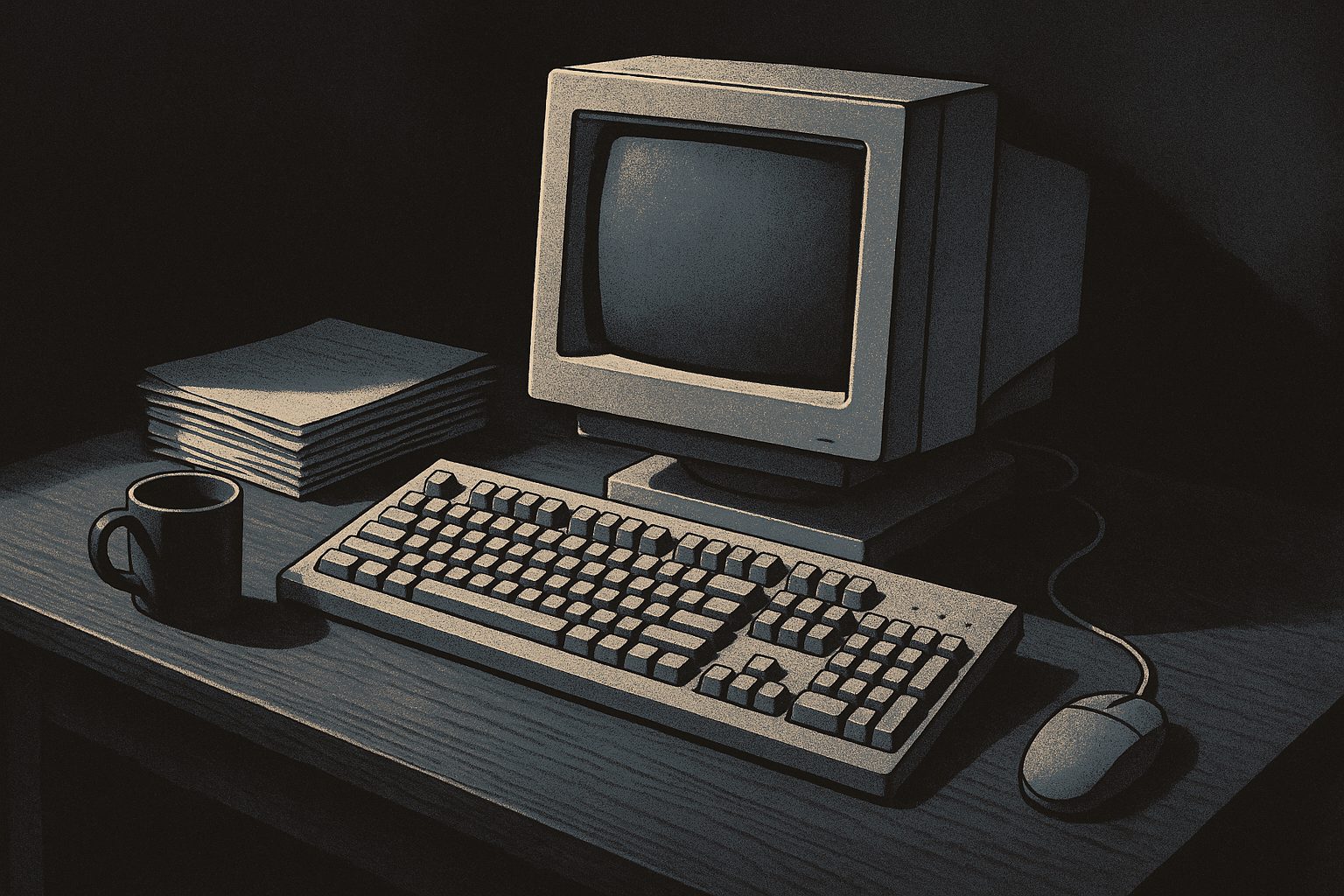 The archive, dated 2008. No machine had been invented to blame yet.
They’re in there.
Here’s 2008 me on skateboarding’s place in the world: “it will probably never be respected in the same way as mainstream sports, and that’s OK. In fact, that’s a good thing.” That stopped me cold, because “and that’s OK — in fact, that’s a good thing” is a move I made several times in recent essays without once noticing I was making it, and there it is eighteen years earlier, same shape, same little intensifying pivot, written by a guy who had never heard the phrase “language model” or “negative parallelism.” The over-balanced sentence isn’t something a machine taught me. It’s something I was already doing while the machines were still failing to parse the word “the” and the rest of us were listening to Coldplay sing about the French Revolution.
It isn’t only the sentences, either. It’s the frame of mind. Here’s 2008 me worrying, in print, that “the keyboard warrior culture of online discourse has eliminated shades of gray,” then asking whether a dumb argument about crossword puzzles might be “a metaphor for how we handle larger, more important issues.” Reasonable to a fault. Both-sides by reflex. Forever turning the question over to find the nuance in it. That temperament reads, to an AI detector, as hedging — and it’s also just how a kid raised polite and then sanded smooth by twenty years of technical editors actually thinks. The machine is trained to be evenhanded and reasonable. So was I, from the other direction. We arrived at the same voice from opposite ends of the room, and now mine looks derivative of the thing that copied it.
And the blog, you could argue, was unedited — just me, alone in a Drupal CMS with my bad habits intact. So here’s the harder exhibit. The same era produced a book: Head First JavaScript, run through O’Reilly’s copyeditors and proofreaders, the whole professional apparatus whose entire job is to catch what’s wrong with a sentence. Open chapter one. The Web, I wrote, “doesn’t mean to shut you out, it just doesn’t know better.” It-doesn’t-X-it-just-Y — the single highest-signal AI tell of 2026, in print, vetted by a copyeditor, before the iPhone had an App Store. A page later: “HTML provides the structure, CSS adds the style, and JavaScript puts the rubber to the road” — the cadence-of-threes that lights up every detector, professionally blessed and shipped by one of the most respected publishers in the biz. The tells didn’t slip past the editors. They survived because they were never errors. They were the voice, and the editors, correctly, left the voice alone.
And the loop closes tighter than I’d like. Books like mine — popular, copyedited, endlessly scanned and scraped — are exactly the kind of thing these models trained on. So when one writes “it doesn’t shut you out, it just doesn’t know better” and a detector flags it as synthetic, there’s a real chance the machine is echoing a sentence it once read in me. It isn’t mimicking a stranger. It may be quoting me back to myself — and we’ve both been told it sounds fake.
The punctuation
But the part that actually undid me was the punctuation.
For my entire writing life I broke up ideas with more dashes than anyone around me, and I did it wrong. Here’s the proof, 2008, mid-sentence about my parents bragging on the wrong talent: “But that’s how it goes - I didn’t blame them.” That is not an em-dash. It’s a hyphen with a space on each side: the typographically incorrect mark of a man who knew exactly the pause he wanted and had no idea there was a real character for it. I wrote forty-seven books like that. Editors must have been quietly fixing it for two decades, swapping my spaced hyphens for proper em-dashes and never mentioning it, the way you straighten a friend’s collar without making it a thing.
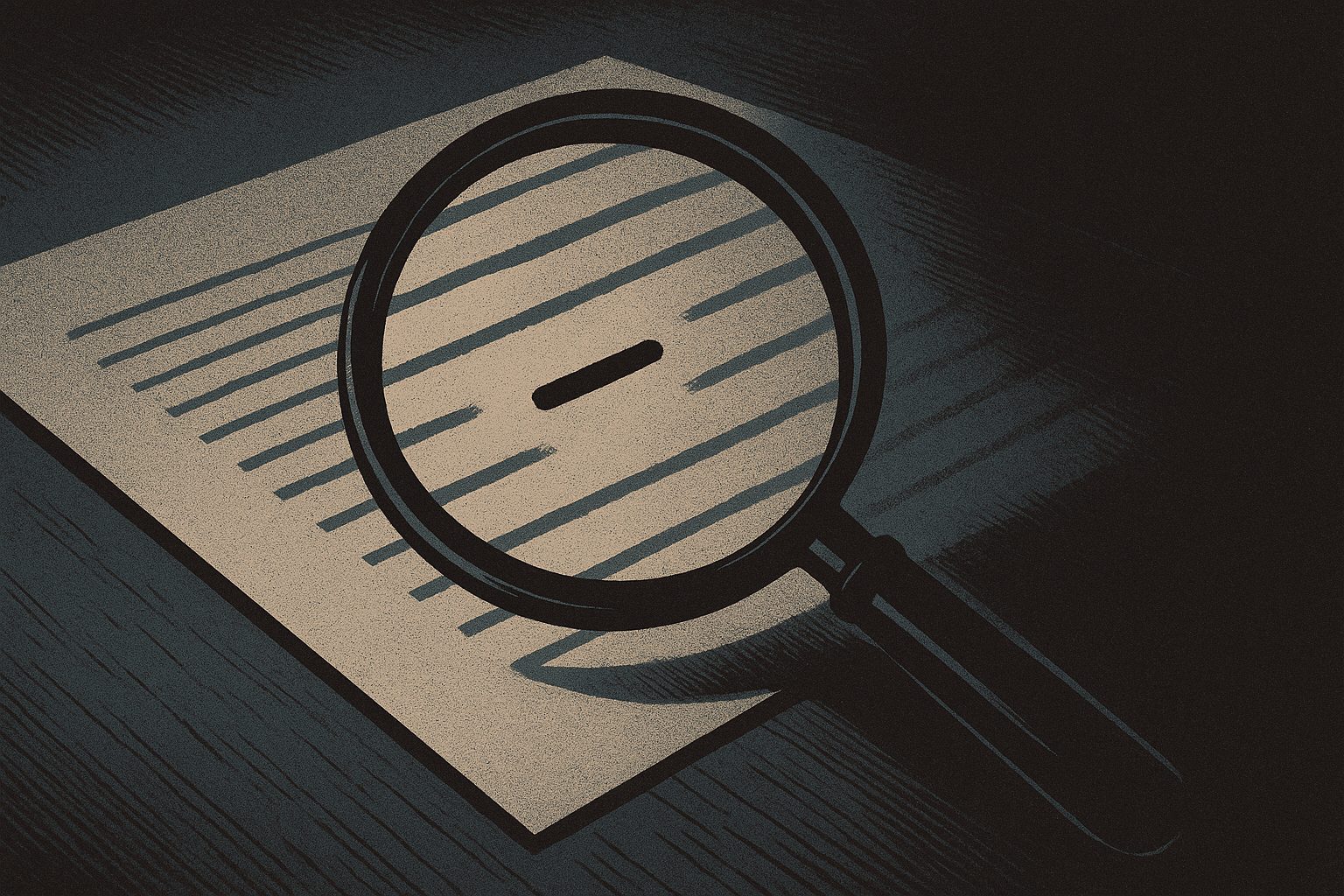 A spaced hyphen: I knew the pause I wanted; I didn't know the key.
Do you know how I finally learned the difference? From the AI panic. I read that the em-dash had become a notorious tell of machine writing, went to find out what an em-dash even was, and discovered it was the thing I’d been reaching for and missing my entire career. The discourse that exists to flag inhuman writing is what taught me to punctuate my very human habit correctly. So I learned the keystroke. And now I use em-dashes properly, deliberately, more than most people do — more than I should, if I’m honest — which means I took a lifelong quirk, finally rendered it right, and in the same motion made it read more like a robot, not less. I corrected my way into the tell.
The oldest furniture
Pull back, and the joke has teeth. These “AI tells” — the antithesis, the tricolon, the em-dash, the rhetorical question turned over and examined — are not inventions of the machine. They’re the oldest furniture in English rhetoric. Cicero balanced his clauses; the King James translators ran them in threes; every essayist worth re-reading leans on the turn. The models write this way because they were trained on centuries of people writing this way. The machine didn’t give me my style; it learned its style from the enormous pile of us, me somewhere in it, and now hands it back so uniformly that the original owners look like forgeries.
There’s a name for the mechanism, and it isn’t mine. Stephen Krashen spent a career arguing that we don’t learn to write so much as acquire it — subconsciously, from reading, not from instruction at a desk. Style is caught from whatever language you swim in. That’s the whole story of how I got my tells: I never studied the balanced clause, I just read enough people who leaned on it that it became the shape my own thoughts cooled into. Which means the loop has one more turn than I’d counted, and the last turn is the one that gets me. The internet a kid learns to write from now is already thick with machine prose. If style comes from input, the next generation acquires the model’s cadence the way I acquired Cicero’s through a hundred intermediaries — no prompting, no cheating, just reading the water they grew up in. They’ll write “not this, but that” because they read it ten thousand times before they were old enough to notice the move, and a detector will book them for a habit they caught the oldest human way there is. They won’t have cheated. They’ll just have grown up downstream.
The competent stranger
But the machine’s cadence is the least of what they’ll inherit. We’re already teaching that same generation that balance, rhythm, and the considered pause are suspicious — that to prove you’re human you should write flatter, plainer, more broken, less like someone who cares where a sentence lands. Keep it flat. Then, now and then, jolt them. Kapow — a shock of humanity. That is exactly backwards. It’s the advice that manufactures the competent stranger: the gray hotel-lobby prose that offends no detector and moves no reader. I wrote another essay about what over-polishing does to a voice. This is that same vandalism, inverted — voluntary self-flattening, performed out of fear of resembling the thing that imitates you.
And flattening doesn’t even buy what it costs, because the detectors don’t agree on which way human runs. The ones built on the cultural list of tells read polish as guilt — balance, rhythm, the considered pause. The ones that shipped first score on perplexity, how surprising each word is, and they read it backwards: plain and predictable looks like the machine, ornate and high-vocabulary looks like the human. Flourish trips one, plainness trips the other, and there’s no register that clears both. You can’t write your way to innocence; you only get to pick which detector calls you a fraud. And the joke that ends it: you can scrub the flag off a too-plain essay by asking a chatbot to dress up the vocabulary. You beat the AI detector with AI.
The readers have a shorthand for it now: AI;DR. AI; didn’t read — the suspicious age’s answer to too long; didn’t read, where the old semicolon meant the more you wrote the less I’d finish, and the new one means I caught the scent of a machine and closed the tab before the first sentence finished loading. I get the reflex. I share the disgust under it; nobody owes their afternoon to something a grifter generated in forty-five seconds. But the reflex fires on a smell, not a reading — and the smell is the balanced clause I’ve been laying down since 2008. AI;DR can’t tell the empty thing from the made one. It only tells the careful reader to leave before finding out, which means the people most certain they’re shielding themselves from the slop are the ones who’ll never again finish anything that merely sounds like it. The detector was a machine doing this badly. This is the mob doing it by reflex, and faster.
The honest move
I want to be fair to my own machine, because some tells are real. The abstraction with no anchor under it, the paragraph that adds words without going anywhere, the hedging that softens every claim into vapor — those genuinely mark prose that nobody was home for, human or otherwise, and AI detection tools are right to flag them. The error isn’t detection. It’s the collapse of the categories: the slow slide where “sounds like AI” stops meaning empty and starts meaning crafted. A tell that fires on emptiness is a quality check. A tell that fires on the em-dash is a witch hunt with good production values.
And yes — because I’m not going to pretend otherwise — this essay was written with AI assistance too, like the rest. AI has become my personal editor-in-chief, and essays like this one are better off for it. Run my own detector on it and it will light up, and you will have no clean way to sort the tells that are mine from the tells that are the model’s, because at this point we make the same shapes, because it learned them from people like me. That used to feel like a problem to solve. I’ve decided it’s just the weather now. The honest move was never to scrub my prose until no machine recognized it. The honest move is to tell you how it was made and let the sentences stay as balanced as they were always going to be.
Somewhere there’s a version of me in 2008, hammering a spaced hyphen into a sentence about skateboarding, sure of the pause and ignorant of the punctuation, with no idea that the mark he was groping for would one day be filed as evidence of his own erasure. I’d like to tell him he was right about the pause. I’d like to tell him a machine would eventually teach him the correct key, and that the world would then call him the machine for pressing it.
The tells were mine first. I have the receipts, and they’re dated 2008.