We Already Voted With Our Lives
We hand machines near-total control of an airliner at 500 mph with our lives aboard and don't blink, then call it untenable when an AI helps write a jingle. I don't think that asymmetry is hypocrisy.
I’m an electrical engineer by training and a software developer by trade, and these days I build AI-assisted creative tools, which means I spend a lot of my time arguing (largely with myself) about how much of the judgment has to stay human. And the longer I argue it, the more I keep tripping over one strange fact that nobody on either side seems to want to look at.
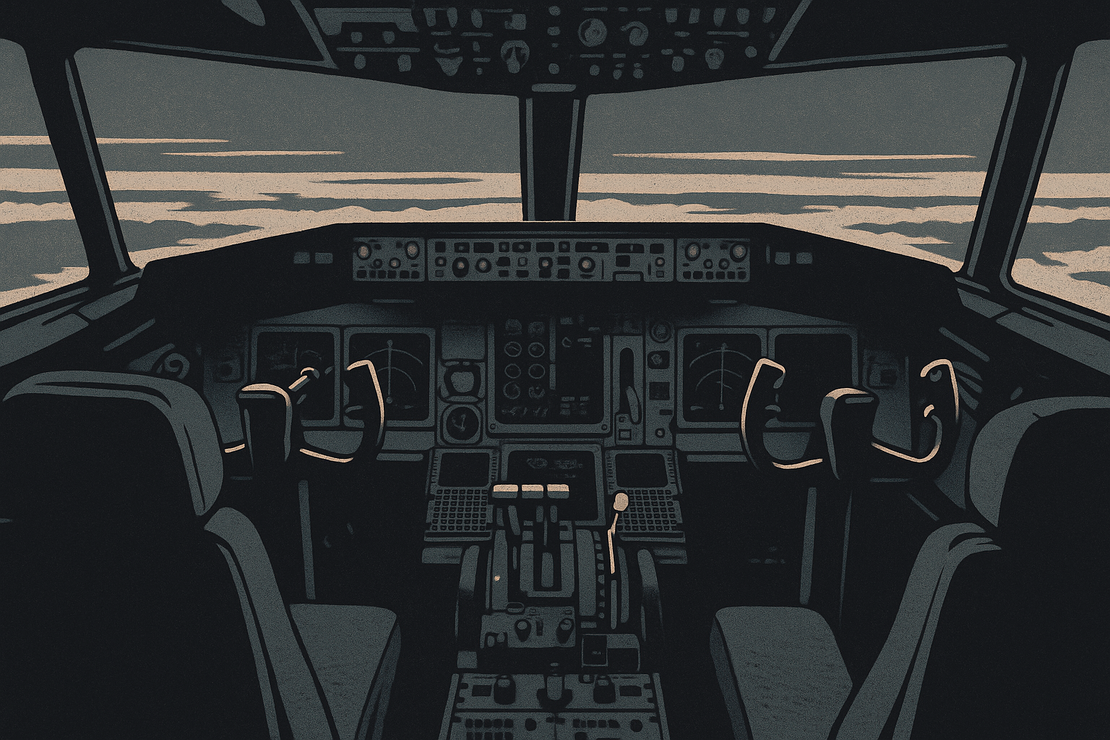
On a normal commercial flight, the autopilot is flying the plane for something like ninety percent of the time, and closer to ninety-nine on a long-haul. It handles the climb, the cruise, the descent, the navigation, the small constant corrections, often the landing. It does all of it more precisely than a human hand could. We know this. We board anyway, by the millions, at five hundred miles an hour, seven miles up, with our lives entirely inside a machine’s control loop, and few of us give it a second thought. Then AI helps somebody write a jingle to sell laundry detergent or work out the shape of a murder-mystery, and a meaningful slice of the culture calls it a desecration.
I want to take that gap seriously, because the easy thing to do with it is the wrong thing.
The easy version is a trap
The cheap, tempting move is the gotcha: you hypocrites trust a machine with your actual life but clutch your pearls over an AI jingle. Don’t make that argument. It loses, and it deserves to. A mildly observant critic knocks it down with five words, flying and art aren’t comparable, and they’re right. The stakes are different, the domains are different, and even the masters don’t transfer: nobody is lobbying to hang Sully’s flight plans in MoMA, and nobody, given the choice, wants Bob Ross at the controls. In the seat next to you, narrating the storm as happy little turbulence? Yes, please. At the yoke? Let’s not. The two trades share nothing but the word machine, and you don’t owe anyone consistency across that.
But the gap is still real, and it’s still telling us something. The trick is to stop using it as an accusation and start using it as evidence. The question isn’t why are people such hypocrites. The question is: what is actually different about the two cases, such that we surrender one without blinking and defend the other to the death?
The instinct was never about doing the work
Start with what the autopilot proves, because it’s cleaner than anything in the art fight. We did not give up judgment when we accepted the autopilot. There is still a highly skilled human in the cockpit with thousands of hours of training, awake, watching, ready to take the controls, answerable for the flight. What we gave up was execution: the actual minute-to-minute flying of the aircraft. The pilot kept the part that matters and handed the machine the part that didn’t.
That distinction is the whole thing, and it’s the same one I made in an earlier essay about creative work. The value was never in the manual labor of producing the thing. It was in the judgment that steers the producing. A pilot who never touches the yoke for six hours but catches the one anomaly that matters is doing the actual job, and nobody pretends the job was only those twelve seconds of intervention. So when people say human judgment must stay in the loop for creative work, they are right, and they have already agreed to exactly the arrangement they think they’re refusing. Judgment in the loop never required human hands on the yoke. We settled that at thirty-five thousand feet, years ago, and nobody marched on Honeywell.
We resist in proportion to how much of us is in it
So why does the same arrangement feel like surrender in one place and like a normal Tuesday in the other? Here’s the pattern, and once you see it you can’t unsee it.
Serious cyclists have a quiet contempt for e-bikes, and the usually-unspoken reason isn’t safety or congestion. It’s that they spent years building the fitness an e-bike hands you for the price of a motor and battery. The motor doesn’t offend them because it’s dangerous. It offends them because it skips the part they bled for, the part they built their identity around. Now notice: nobody resents a dishwasher. Nobody’s identity is wrapped up in scrubbing plates, so the machine that does it is pure relief. I’m close friends with many of these cyclists, I’m one of them actually, and they’re not entirely wrong to hold contempt for someone purchasing what they’ve put thousands of hours into building. But they don’t shed any tears for the manual dishwashers of times past.
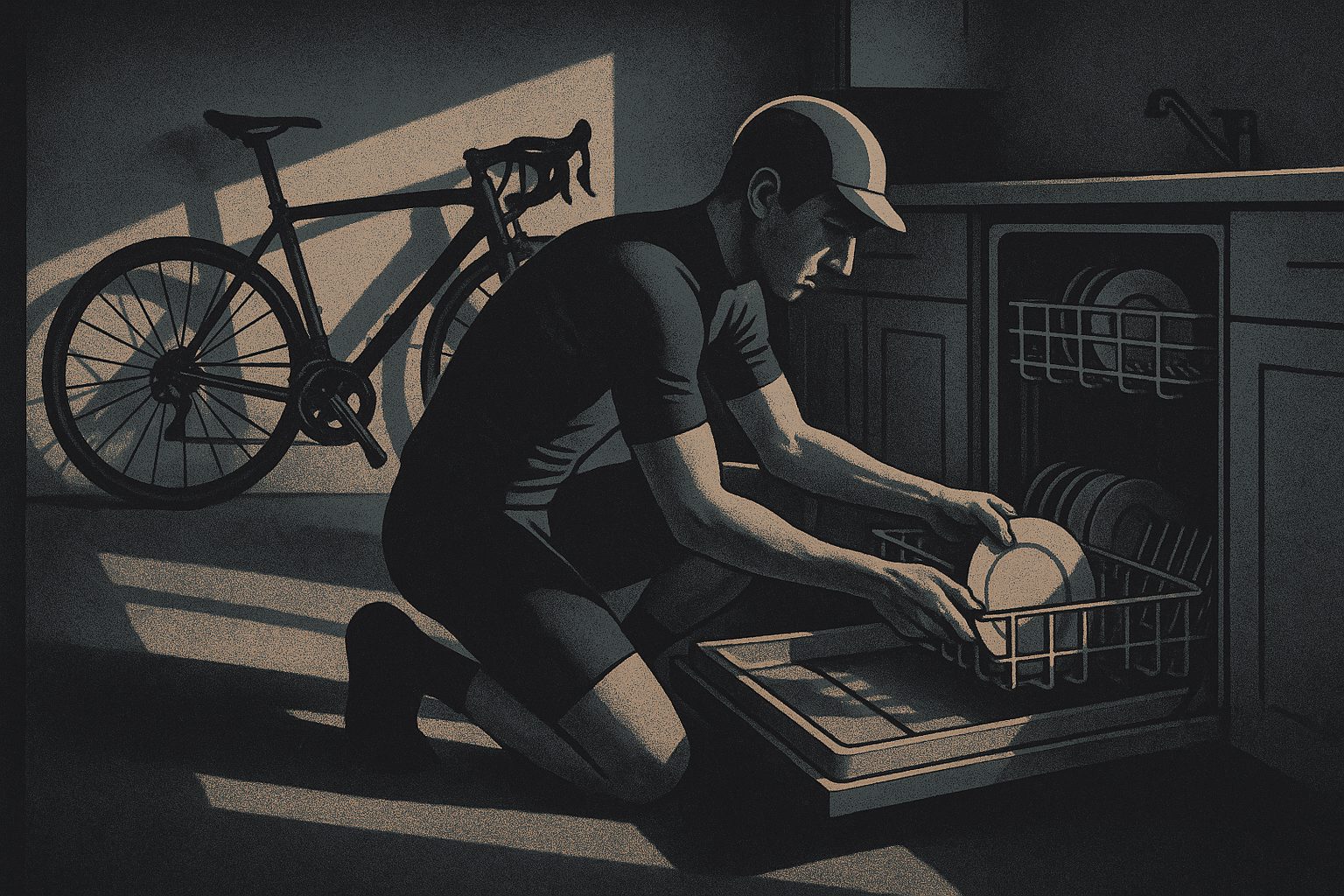 He earns every mile under his own leg power, then hands the plates to the machine without a flicker of guilt. The whole law in one kitchen.
That’s the law underneath the autopilot gap. We accept automation in inverse proportion to how much of ourselves is bound up in the task. No passenger ever identified as the person flying the plane; there’s no self to lose because there’s no investment on the line, so the machine is welcome. But a writer, an illustrator, a composer has spent a life becoming the person who can do the thing, and the machine that does it reaches straight for the identity. The resistance isn’t really about the stakes, which is why the life-and-death case is the easy one. It’s about the self. The autopilot is fine precisely because nothing of you is in it. The pilots are the tell here. They didn’t revolt when the machine took the yoke, because the machine never took the thing that made them pilots: command, answerability, the person the passengers were actually trusting. Handing off the stick wasn’t a demotion; it was the job description finally admitting which part was ever the point.
This is not an accusation. It’s a diagnosis, and it’s a much more sympathetic one than “hypocrite.” It says the resistance is coming from a real and human place. It’s just aimed at the wrong target.
Where the analogy stops
There’s an honest limit to this analogy, and you may have already sensed it. Aviation is missing the three things that make creative AI genuinely fraught. There is no authorship of a flight, no credit anyone’s claiming (a pilot gets a uniform and a cool hat, not a byline), no meaning at stake in who held the controls. And it has one thing creative work doesn’t: a success you can measure cold, in crashes that don’t happen. The autopilot earned its place with a body count that fell.
So the analogy proves something narrow, that keeping human judgment in command never required human execution. It does not prove that you should feel fine about a machine writing your novel, because the novel has authorship and meaning and a self attached, and the flight does not. Anyone who runs “we accept autopilot, so quit complaining about AI” is committing exactly the false-equivalence the gotcha deserved to lose on. The autopilot settles the judgment-versus-execution question. It leaves every question about meaning wide open.
What the pilot is actually for
Which raises the real question: if the autopilot flies better than the human, and the human mostly watches, why is the human there at all? Liability, partly. But underneath that is something the whole debate should sit with: the pilot is in the plane. When the autopilot fails, the person who has to fix it is strapped into the same aircraft as everyone else, falling at the same speed with the same consequences. The human in the loop is not there to do the labor. The human is there to be answerable, and their answerability is total because they share the stakes.
Watch what happens to that intuition when you remove it. The unease people feel about a fully driverless taxi isn’t really about the software being worse than a human driver, because increasingly it isn’t. I joke that I’m ready for the robots to take over driving. We all know they’re going to be vastly better than us given our predilection for taking calls, putting on mascara, and generally paying less than the required attention for piloting a high-speed metal box. We’re resisting self-driving not so much because we don’t trust robots but because there’s no longer anyone aboard with skin in the game, nobody whose own neck is on the line if the judgment goes wrong. We are comfortable handing a machine the controls right up until we notice that no human is left holding the consequences, in person. Human-in-the-loop via a connection to effectively a call center is just not the same.
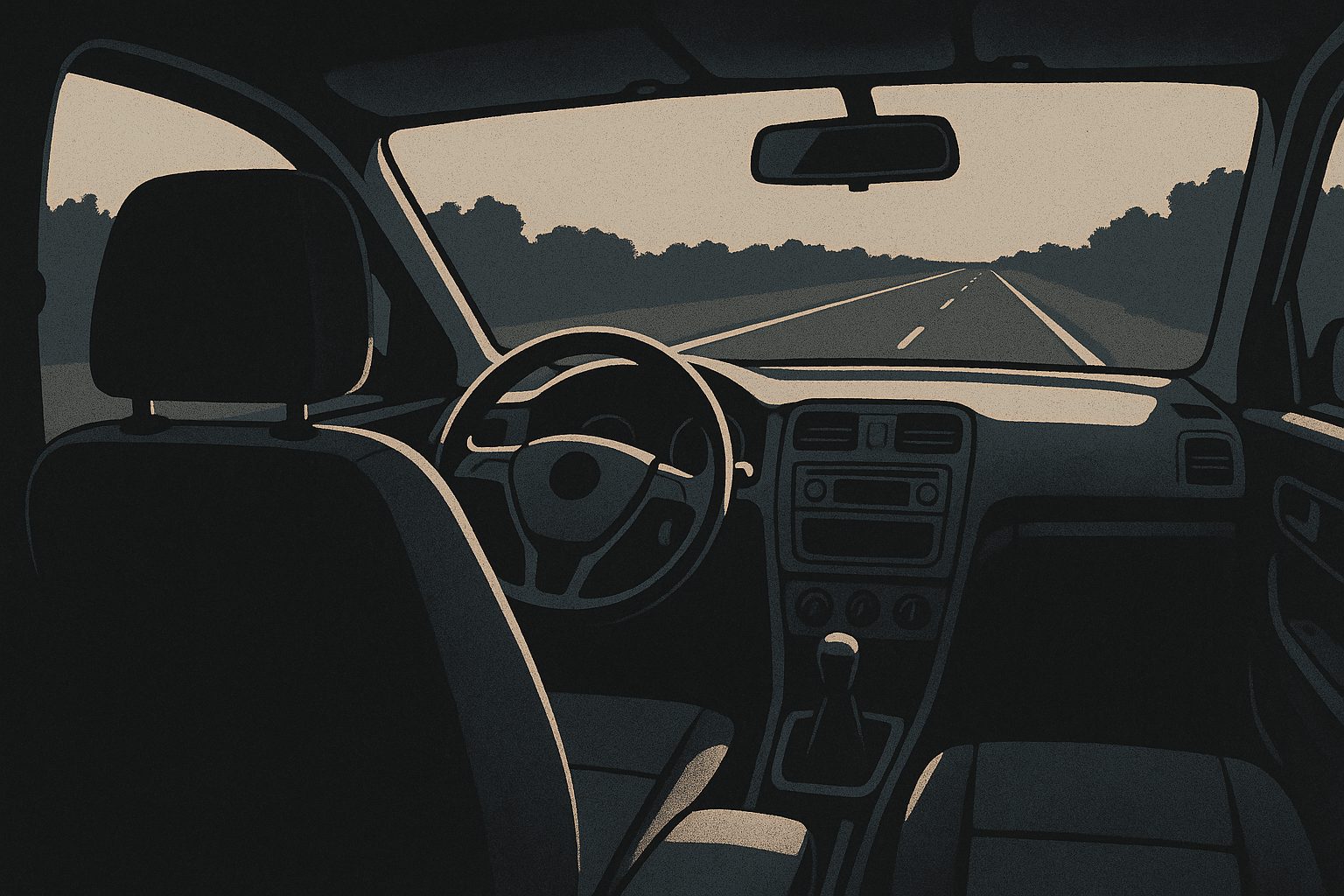 Nobody in the seat, the wheel turning itself. We are fine with this right up until we notice no one aboard shares the stakes.
That is the legitimate core of “keep a human in the loop,” and it survives everything else in this essay. It was never that a human must do the work. It’s that a human must be answerable for it. And the creative version of skin in the game is the plainest thing in the world: a name on the work. Put your name on it and you’ve climbed into the plane. You’re answerable for every sentence the model drafted, the same way the pilot is answerable for every mile the autopilot flew. That, and not a percentage of the keystrokes, is what makes the work yours, which is an argument I’ve made at length on its own.
The thing we’re actually protecting
There’s a deeper layer here, and it’s the one I’ve been angling toward.
When I say people rank their craft-identity above their literal safety in the machine’s hands, that sounds like an indictment. It isn’t, because ranking meaning above mere survival is one of the oldest and most human things there is. People have died in duels over their name. Soldiers have died for a flag. Frankl, in the Nazi concentration camps, found that the people who survived were not the ones with the most will to live but the ones with the most to live for. We have always held that a life without meaning is worth less than a meaningful life cut short. The creative resister, defending something they value above their own safety, is standing in a very long line.
So the strangeness was never the ranking. The strangeness is that we don’t notice we’ve made it. We hand a machine our life on a Tuesday and defend our craft to the death on Wednesday and never feel the contradiction, because from the inside there is no contradiction. “Trusting a machine” isn’t one act. The autopilot takes a task that was never any part of who you are; nothing is displaced, so you feel nothing. Creative AI takes the task that, for the maker, is who they are. The contradiction only appears from the outside, when someone flattens both into “trusting machines.” Up close, they aren’t the same experience at all, and the gap between them is exactly the measure of how much self was in the task.
What no machine has
And here, finally, is the thing worth ending on, because it turns the whole argument generous.
The thing the resister is protecting, that meaning they rank above survival, is precisely the thing no machine has. A model will produce your jingle and your murder-mystery and never once care whether it lives or dies, because there is nothing it would die for, even that laundry detergent. The willingness to put meaning above survival may be the cleanest line we have between us and the tools. So the resistance, incoherent as it looks when you hold it up against the autopilot, is reaching for something true. The instinct is right even where the logic is tangled. People aren’t defending the keystrokes. They’re defending the part of making that a machine can’t be made to mean.
Which tells you how to actually use these tools without losing the thing worth keeping. Fly the pilot model. Let the machine execute, the way the autopilot does, brilliantly and tirelessly and without a stake in the outcome. Keep the judgment human, the way the cockpit does. And put your name on it, climb into the plane, be answerable for the whole flight. We already voted for this arrangement once, with the highest stakes we have. We just never admitted that the vote settled anything.