A grandstand of exactly one
Right now, the Tour de France is finishing a stage on Alpe d’Huez: 21 hairpins, each one signed with the name of a rider who won there.
I’ve ridden it. Once.
The pros do it in about forty minutes. I did it in an hour and seven, which means that by the time I dragged myself to the top, the stage winner could have finished, showered, and started to worry about me.
The only spectator I had was my wife, loosely pacing me from a rental car. A grandstand of exactly one.
Then the mountain evened the score. After a snack at the summit, she got spooked driving down the exposed hairpins on the back side, so I rode out front and paced her on the bike. We spent the day taking turns being each other’s entire crowd.
Which is a smaller version of the thing I couldn’t stop wondering about. Today, something like 80,000 people will line that climb to watch a stranger suffer up it, and that matters enormously. Why?
This weekend runs the experiment for you. Alpe d’Huez on one channel. The Hungarian Grand Prix on another, at a circuit so hard to overtake on it reliably produces a parade. A thrilling race and a dull one, side by side, and we watch both.
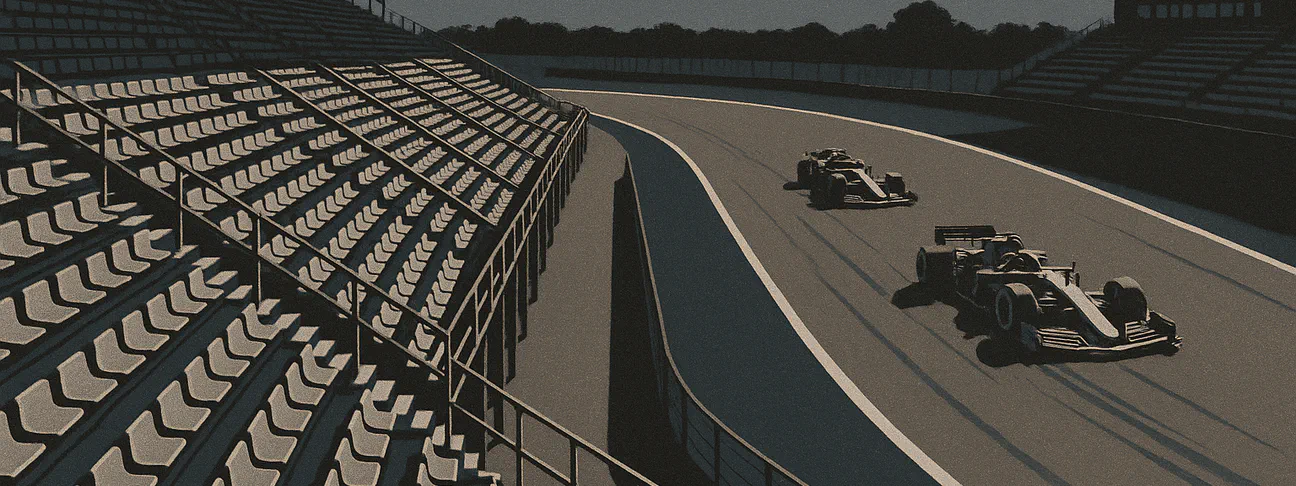
My best answer: the two things a machine can never hand you are a clock and a rival. Make the cars driverless and they will shatter every lap record by Tuesday, and you will never watch twice. Nobody fills a grandstand to watch a forklift outlift a man.
New essay. The calendar handed me the perfect weekend to post it:
 Read the essay
The Unwatchable Race
Article 21 of 30 so far in Machined by Hand
A driverless racing series would be a flawless spectacle with no reason on earth to watch it. The two things optimization can't fake are a clock and a rival.
Read the essay →
Read the essay
The Unwatchable Race
Article 21 of 30 so far in Machined by Hand
A driverless racing series would be a flawless spectacle with no reason on earth to watch it. The two things optimization can't fake are a clock and a rival.
Read the essay →Becoming Gnarly, by email