If you got here from Instagram or a ramp somewhere, this is the page. Everything skate-shaped on the site, collected once so you don’t have to dig for it.
The short version
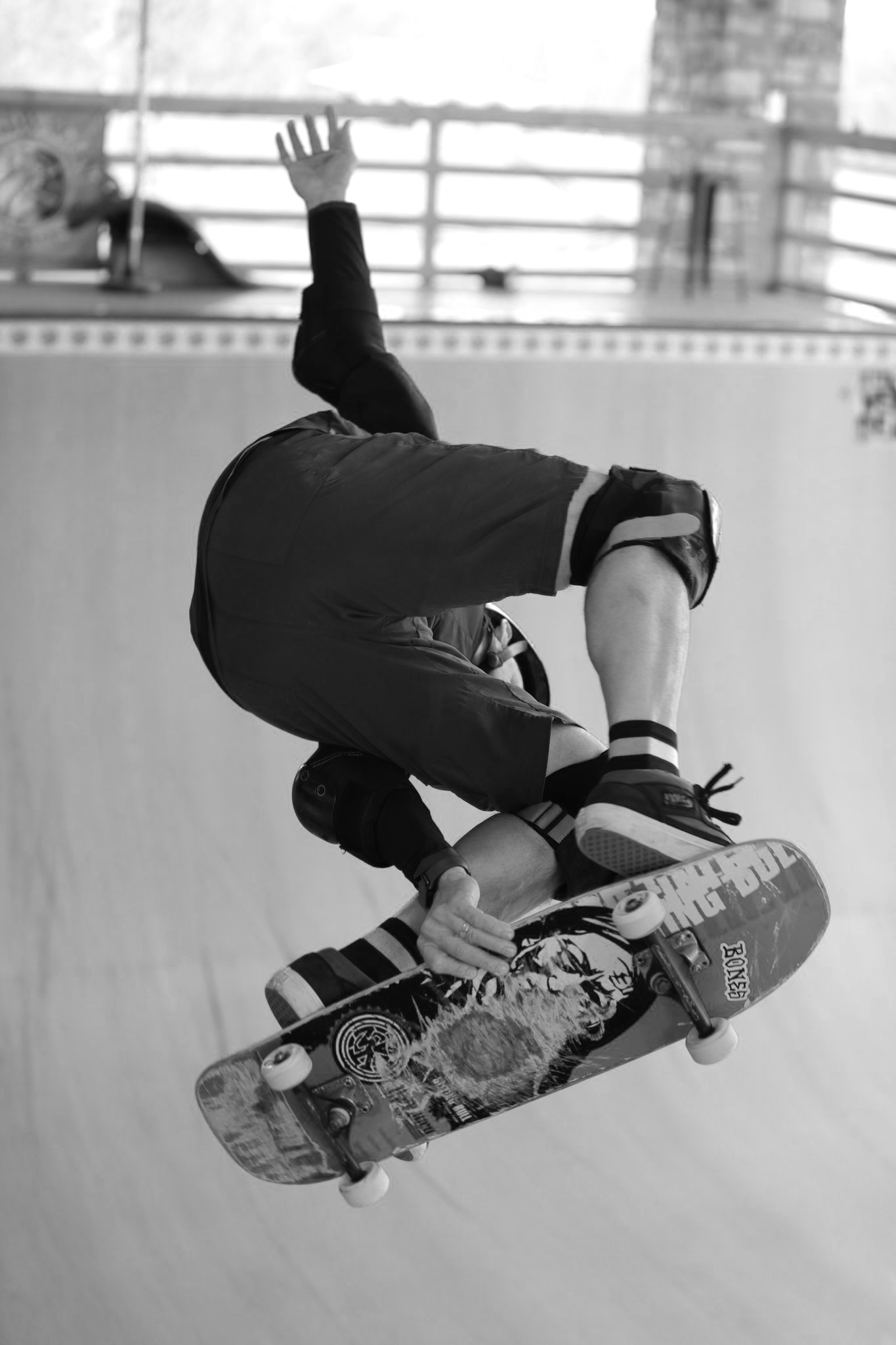
I started skating in the eighties and was briefly sponsored as a vert skater in the early 90s, right before that industry collapsed and took most of the ramps with it. Engineering school and a decade-plus of other work followed. Then I came back, as an amateur, and won a few regional contests along the way. A friend at one of them joked that I looked like an accountant who showed up to destroy. The name stuck. That’s @tndestroyer on Instagram, where I post nothing but skating and mountain biking.
I skate a 13-foot vert ramp at a friend’s place and a 4-foot mini in my own backyard. My favorite trick is still the one my company is named after, a stalefish, and I still land it most days. The 540 is a work in progress. I’m in my fifties.
The Skatepark Project
I sit on the board of The Skatepark Project, Tony Hawk’s foundation, which helps towns that have nowhere for kids to skate get a real park built. The unglamorous, concrete-and-permits kind of work.
How I got there is a story about a gift. Years ago a friend and I built a small app that mapped skateparks, named it The Skatepark Project, and registered the domain. When the foundation later chose that exact name for itself, they asked about the domain. We could have sold it. We gave it to them instead, and the thank-you arrived four years later in a form that never announced itself as one: doubles on a vert ramp. The Long Thank-You tells it properly, and it’s about the gift economy of skateboarding more than about me.
Ramps
I build them. The backyard mini ramp is documented start to finish, including the year-later teardown and rebuild after the transition came out as an ellipse nobody could see, only feel. That one turned into an essay, Riding an Invisible Ellipse, about the difference between a plan and a template.
The tools I built for ramp people are free and live in the browser:
- Ramp Designer renders a live 3D model of a radius-transition ramp and produces a materials list down to the screw count, so you can budget a build before buying a sheet of plywood. The math behind it is written up.
- Transition Facts turns your ramp’s specs into a Nutrition Facts-style label you can print as a sticker, so you stop answering “what’s the tranny?” for the hundredth time.
- Ridewise reads real weather data and tells you whether the trail or the park is rideable today, with its confidence shown.
The writing
The skating shows up in the essays more than any other thing I do, usually as the place an idea gets tested. A few to start with:
- Becoming Gnarly, the through-line under everything on this site, about picking the harder way on purpose and knowing when that’s just vanity.
- The Long Thank-You, the Skatepark Project story and why nobody at a ramp keeps score.
- Riding an Invisible Ellipse, the ramp rebuild.
- Can I Interest You in a Self-Riding Skateboard?, a test for whether AI is coming for something you love.
- Everybody Can Dunk Now, threshold tricks, height you can rent, and the tape measure coming for every sport.
If you own a ramp, run a DIY spot, or are trying to get a park built where you live, I’d like to hear from you. howdy@michaelmorrison.com, or a DM on Instagram. I read everything.