Ai
How AI Helps Me Not Be a Dick
I make things, and I have always been bad at the part that comes after.
Read More
The Wait Was the Review
Over twenty years ago Nashville, my hometown, got its first real concrete skatepark, out at Two Rivers, and those of us in the local scene checked on the construction constantly. I’ve built dozens of wooden ramps over the years, maybe hundreds. Wood has no clock in it. You can take all the time you want, and when you get it wrong you back the screws out and cut another piece. Years after finishing my own ramp I tore off the entire skating surface and rebuilt it. The one thing I couldn’t rebuild was the concrete pool coping, which stayed exactly as it had been set.
Read More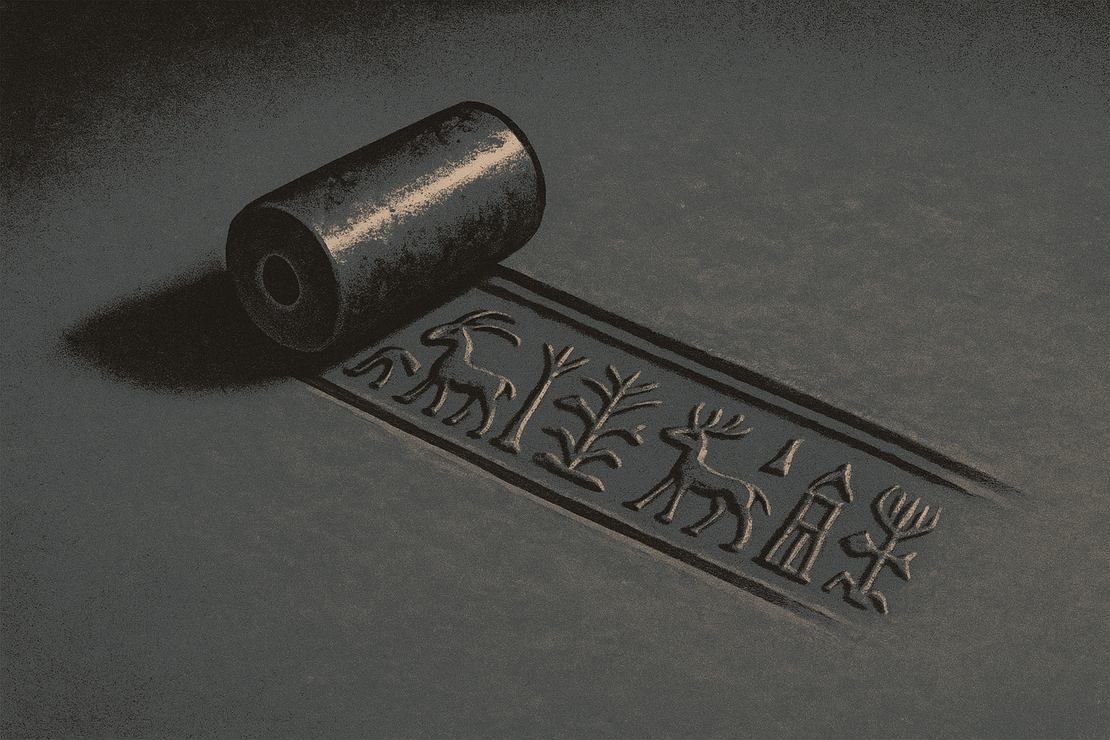
The Seal and the Net
George Dillard writes history essays I read even when they’re far from anything I know, and a while back we traded comments under one of them, so I was primed to click when his piece on document verification came through my feed. In How Do You Know That Document Is Real? he walks five thousand years of the problem: Mesopotamian cylinder seals rolled into wet clay, wax pressed onto parchment tongues, medieval documents cut in half with wavy edges, the flowering of the signature, the calligraphic tughras of the Ottoman sultans. Then he stops at a door and, being a historian rather than a technologist, declines to walk through it. He ends on a question: “Can we build the digital equivalent of the cylinder seal? A lot is riding on the answer to that question.”
Read More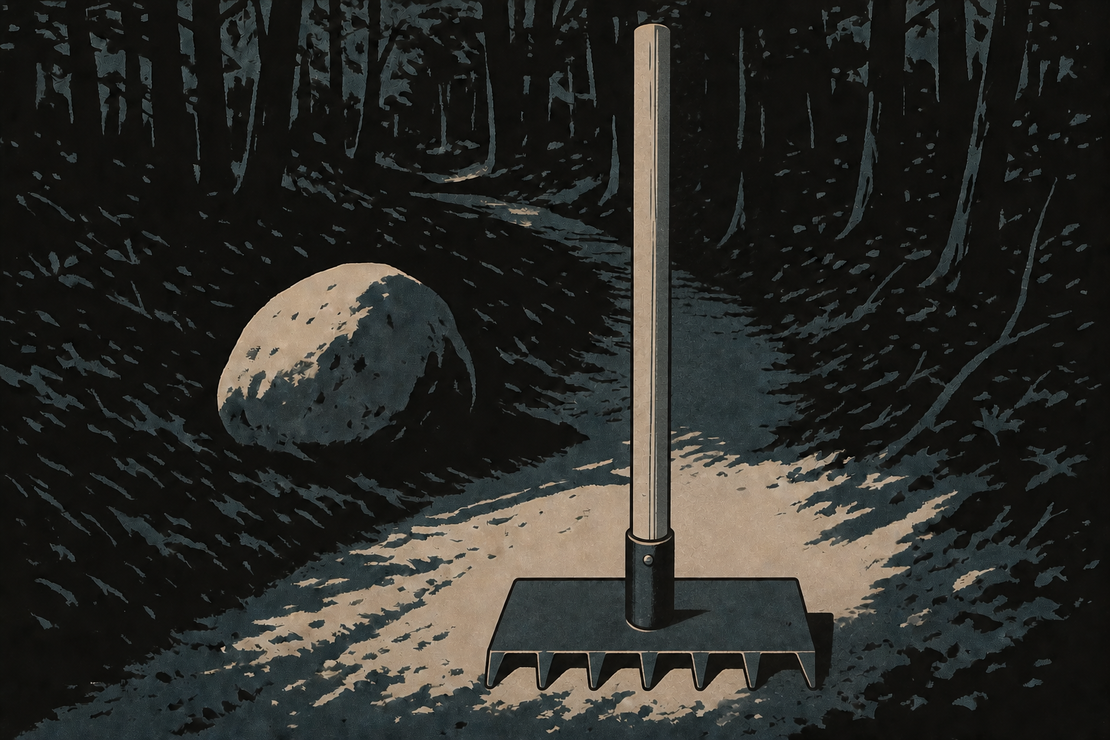
The Blade and the Rock
There’s a tool called a McLeod that shows up on every hand crew that’s ever built a hiking or mountain bike trail: a heavy flat blade about the width of your two hands on one edge, rake tines on the other, on a long ash handle. I’ve spent my share of days behind one, on a crew cutting new trail through the woods the slow way. It’s real work. Progress on a good day was measured in yards. And here’s the thing I remember most clearly about the process: it wasn’t the digging. It was the stopping.
Read More
Again, Funnier
I contradicted myself in public six weeks ago and nobody caught it, including me.
Read More
Holding Both
I read a version of the same essay about once a week now. A writer I’d otherwise stand next to opens somewhere reasonable: the work was taken without anyone’s consent, or the disclosure rules are a polite fiction nobody enforces, or the people getting rich off this are awfully casual about where the thing they’re renting out came from. Good points. The kind I’ve spent my own essays making. Then, somewhere around the third paragraph, the temperature spikes. The data centers are draining the rivers. The billionaires want to own your thoughts and sell them back to you. To hell with all of them. By the last line the writer has said one true thing and six furious ones, and welded them together so tightly I can’t pry the true one loose. I close the tab agreeing with less than I did when I opened it.
Read More
The Forge Was a Side Effect
I have written somewhere north of six million words for money, all long before AI writing was a thing. Computer books, mostly, from the mid-nineties to 2010, the kind with a version number in the title and a shelf life just a bit longer than the milk in your fridge. People who learn this sometimes ask if I’d do it again, now. I used to give a wistful answer. The honest one, the one this whole run of essays has been circling without quite saying, is no. Not a chance. If you handed me a machine today that could produce those six million competent, on-deadline words while I did something else, I’d take it before you finished the sentence, and I’d whistle while walking away.
Read More
Everybody Can Dunk Now
Basketball tryouts run on a piece of equipment nobody talks about, and it isn’t the ball. It’s the tape measure.
Read More
The Anti-Engagement Product
Sojourn, the bedtime-story app I’m building, has a success metric that most product people find hard to accept. The metric is that the listener falls asleep. The numbers a product person lives by — session length, retention, daily actives — all point the wrong way here. The whole machine is tuned to end the session as quickly and gently as it can, and then to not only be entirely fine with you not opening it again tonight, but to celebrate that. The audio fades to silence on a timer. There is no streak, no notification, no come-back-tomorrow nudge, no social anything. The product is, in the most literal sense, trying to get rid of you.
Read More
The Calculator Question
Every school is having the same fight, and almost nobody fighting it has noticed we already had it once, and won.
Read More
The Intimacy Economy
Making a living from creative work has come down to two options. Run the brand economy: become a person worth following, and let the work be the marketing for the merch. Or run the performance economy: sell the one thing that can’t be copied, being in the room. AI is squeezing artists toward both, because the artifact itself is going free and the value is migrating to identity and tribe. I walked through all of that in The T-Shirt Economy, and it ended somewhere bleak and mostly correct. I’m a horrible salesman, so I wasn’t thrilled.
Read More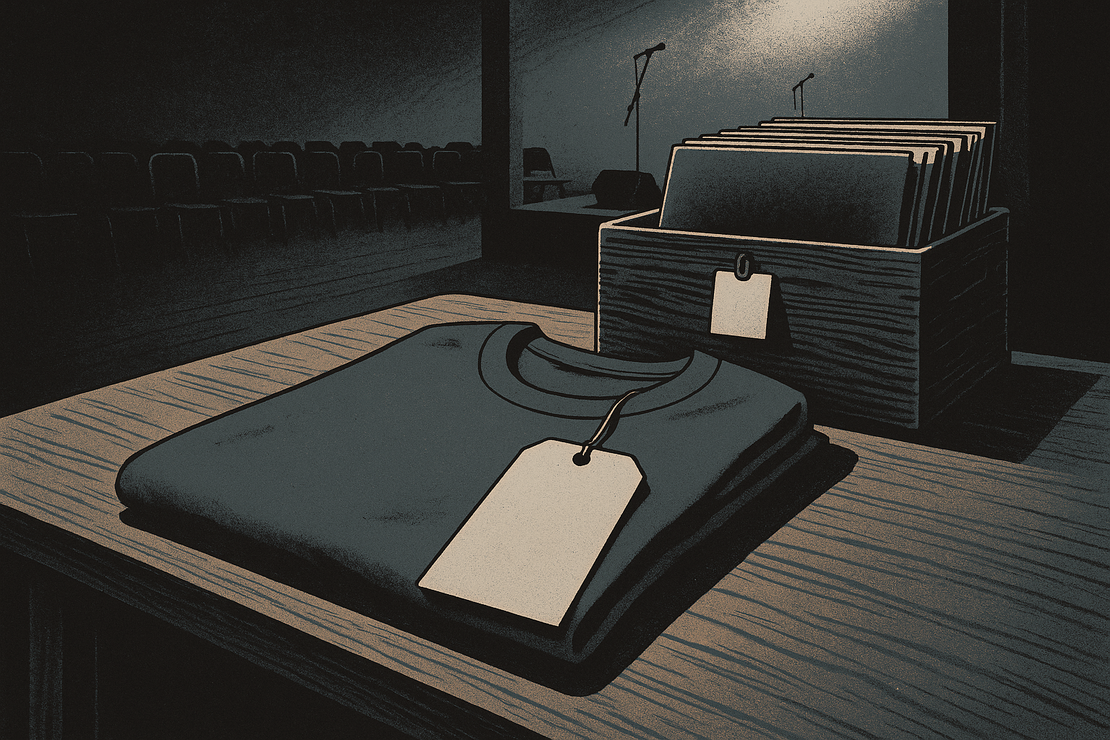
The T-Shirt Economy
At a club show, the band makes more on the shirt than on the performance. Not marginally more. Ticket money passes through a promoter, an agent, and the venue before any of it reaches the people who actually played; the shirt costs a few dollars of cotton, sells for thirty-five, and the only thing standing between the band and that spread is whatever the room charges them for the retail booth. That cut turns out to be contested enough to have produced an organized campaign to abolish it, with hundreds of venues signing on. Nobody organizes over the part of the business that doesn’t matter. I could throw a rock here in Nashville and hit a working musician who could have told me this without doing any math.
Read More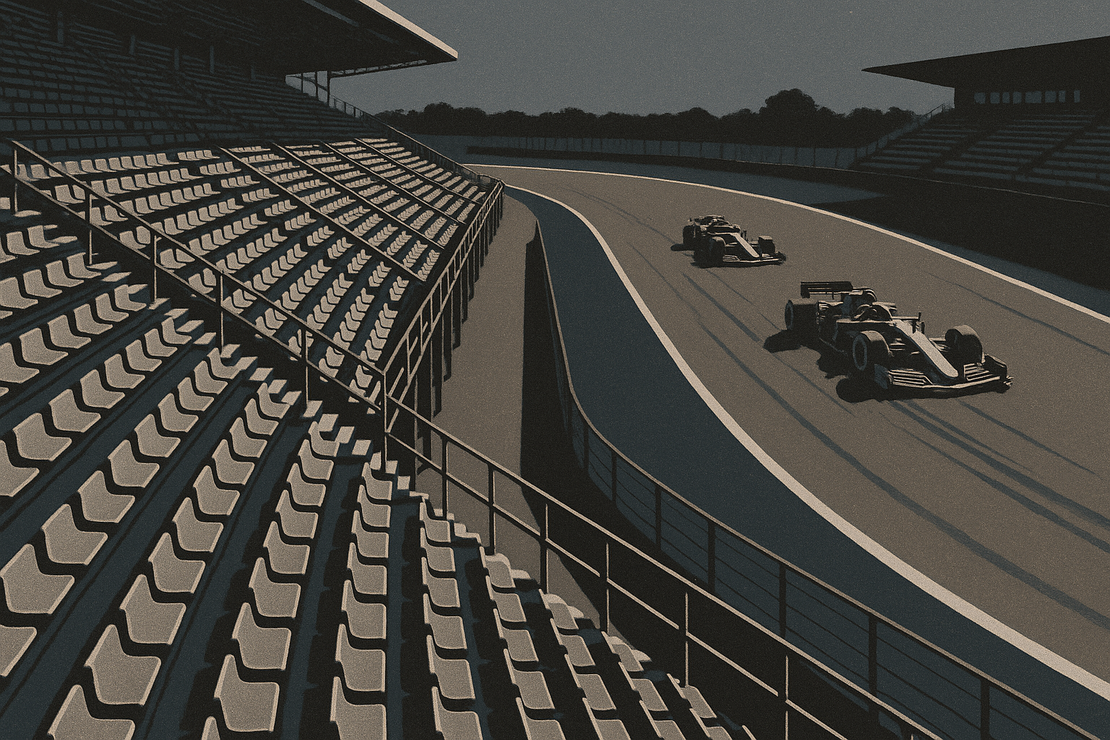
The Unwatchable Race
I had no use for motor racing. Loud, repetitive, a parade of billboards doing two hundred. Then a friend recommended Drive to Survive and I lost a weekend, and what hooked me had almost nothing to do with cars. It was the people. Who they were, who they couldn’t stand, which garages were quietly at war, the engineering trickery, how a tenth of a second in Bahrain rearranged a championship by December. In the early seasons, Guenther Steiner dropped lovable f-bombs left and right, and made you dread that post-race call to Gene Haas, the owner, along with him. The speed was the occasion. The story was the reason.
Read More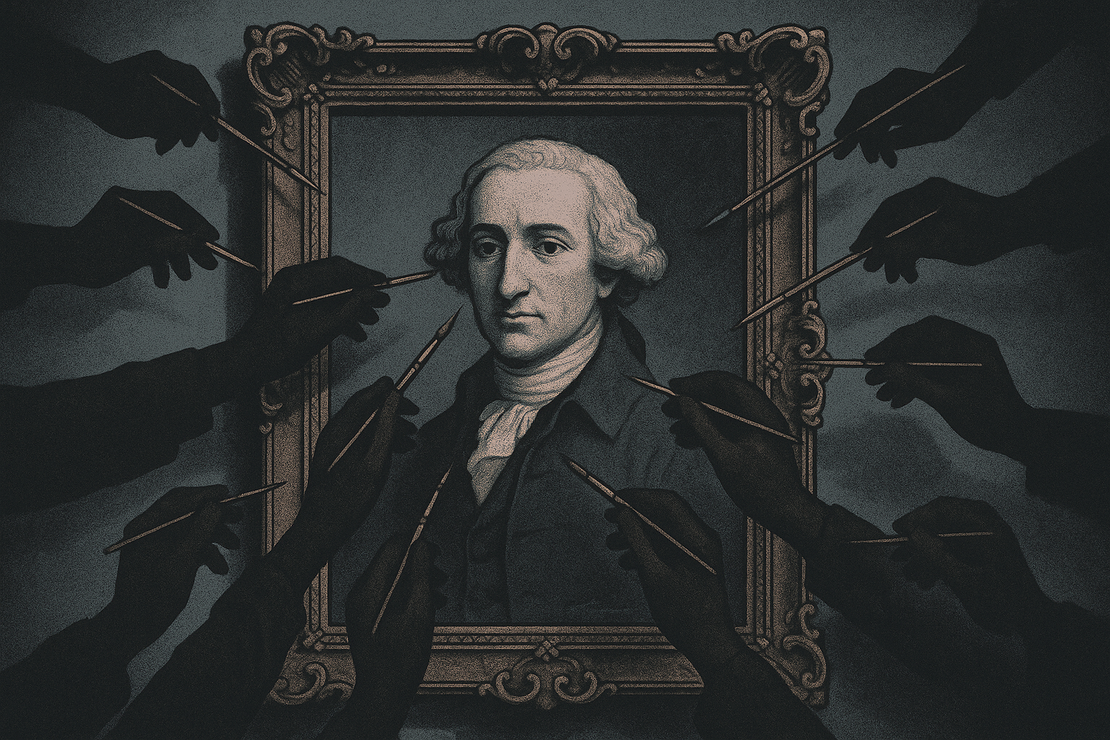
The Hand Was Never the Point
Walk through the Louvre and you can stand in front of a Rubens that Rubens barely touched.
Read More
The Gate I Built
I’ve spent a working life just outside the rooms where work gets anointed. Not entirely outside — I wrote tech books that went out under Sams and O’Reilly imprints, among others, and built apps that shipped under other companies’ logos, CNN and Xfinity among them. I was in those rooms often enough. I just paid a toll at the door every time, and the thing that vouched for the work was never me. It was the imprint on the spine, the logo on the app. That’s most of the truth about me. Here’s the part I’m least comfortable with: for about four years, I helped build one of those gates myself. And the thing making it look ridiculous now is a different machine — one that does for free the exact trick my gate was built to measure.
Read More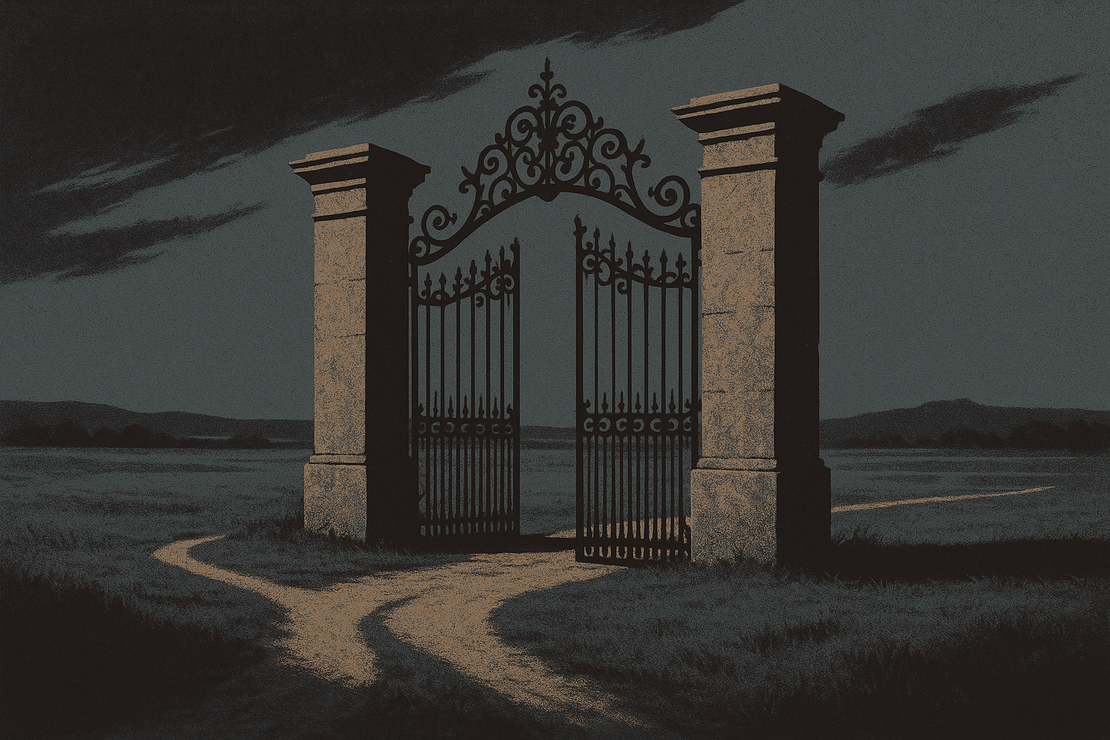
The Gate Was the Product
Nobody anointed this. No imprint vouched for it. No agent shopped it. No editor at a masthead you’d recognize read it first and decided I was worth a slot. I wrote it, I published it, and the only gate it passed through was the one between my draft and the internet, which is to say no gate at all. I mention this not as a sovereignty flex — plenty of unvouched-for writing deserves to stay unvouched-for — but because it’s the vantage point for everything that follows. I’ve spent a working life making things (books for publishers, apps that shipped under other companies’ names), plenty of it the kind of work that gets anointed, none of it under my own name. I’ve been in the rooms; I was just never the one they stamped. That’s a useful place to stand when you want to ask what the anointing was ever actually worth.
Read More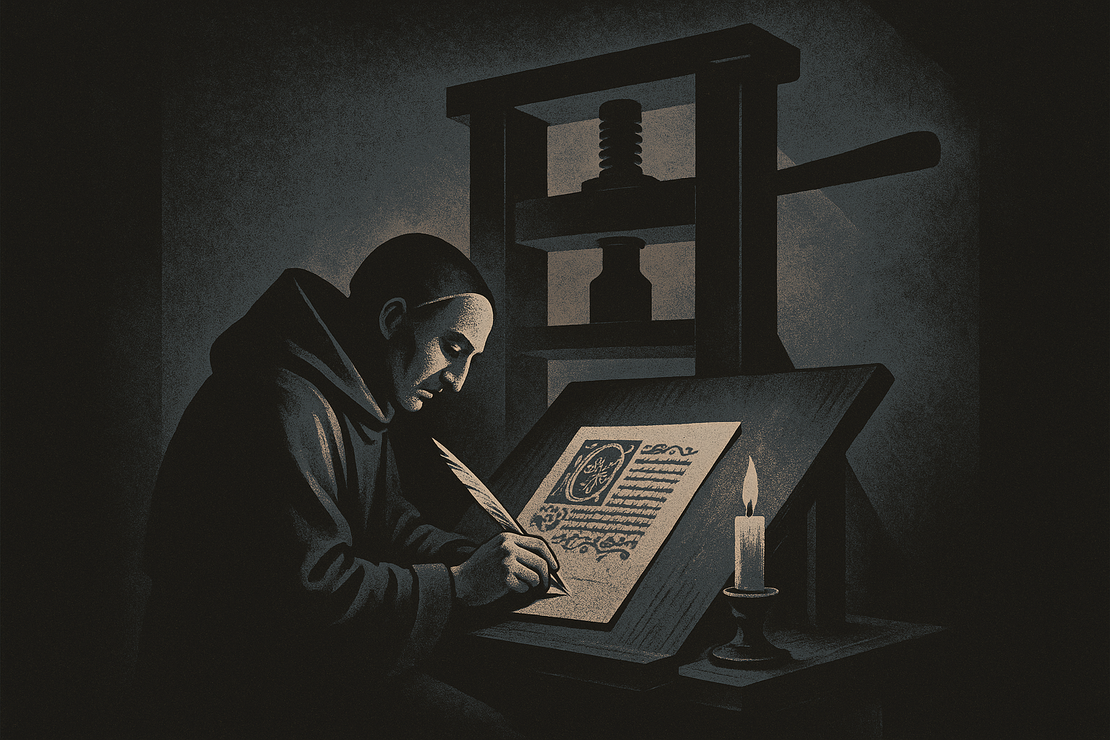
Nobody Told the Scribes
In 1492 a German abbot named Johannes Trithemius wrote a passionate defense of the monastic scribes, the monks who copied books out by hand, one letter at a time, the way it had been done for a thousand years. He was alarmed by the printing press. He argued that the copying was holy work, that a hand-inked page held a devotion no machine could stamp into paper, that something sacred would die if we let the contraption take over. It’s a genuinely moving little book with quotes like, “He who gives up copying because of the invention of printing is no genuine friend of holy Scripture.” He titled it In Praise of Scribes.
Read More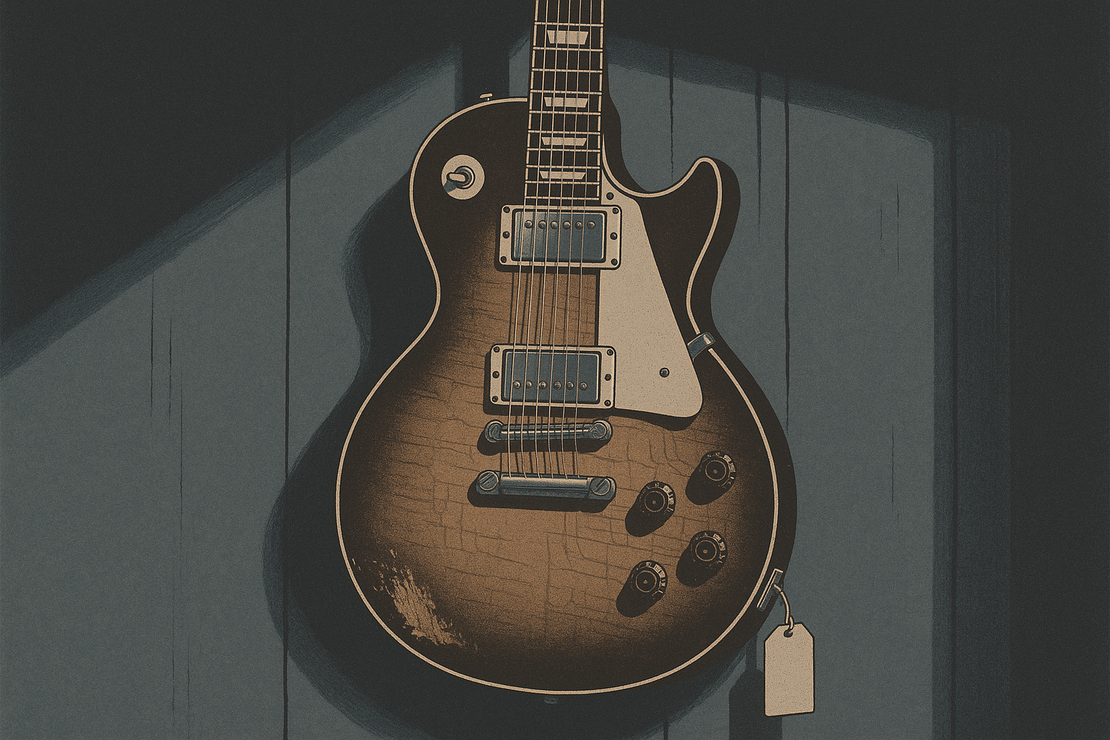
You Can't Relic a Life
There’s a kind of Les Paul guitar that looks like somebody played the life out of it. Sunburst, the finish checked into a thousand hairline cracks the way old nitro lacquer goes after enough cold nights. A worn patch on the back of the neck shaped like a hand. The gold on the hardware dulled to a tarnished green. Around the back, a belt buckle has rubbed a soft crater through the lacquer, down to bare wood, the kind of wear you only get from a few thousand nights standing up with the thing slung low.
Read More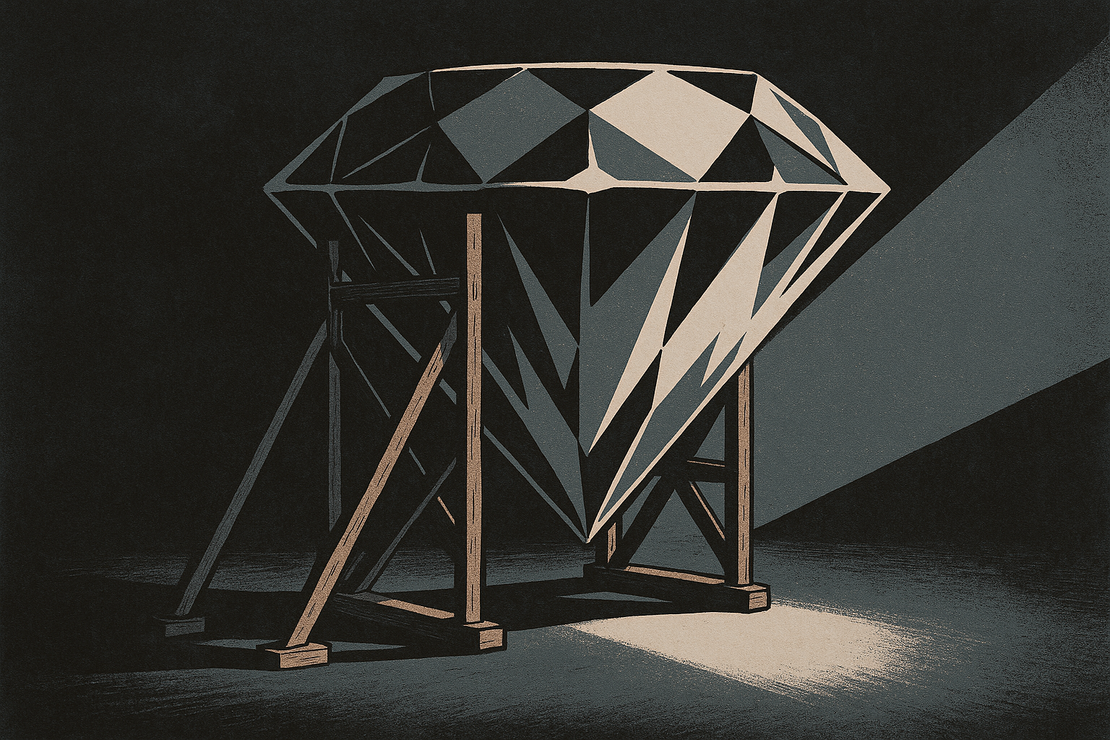
The Diamond Was Always a Story
My wife designs rings. She has the eye: proportion, the way a stone sits in light, when to use a flat rose cut vs. an elongated cushion or an old mine cut, and when the positioning of each reads as intention instead of approximation. What she didn’t have, until fairly recently, was room to use it. A mined center stone of any real size is a four- or five-figure commitment before she’s sketched a single prong, so every design was an expensive bet, and you don’t place many bets when each one costs a mortgage payment. Then lab-grown diamonds got good and cheap in the same handful of years, and the bet got a lot smaller. Now she works the way a painter works: try it, rework it, chase an idea three rings deep just to see where it wants to go.
Read More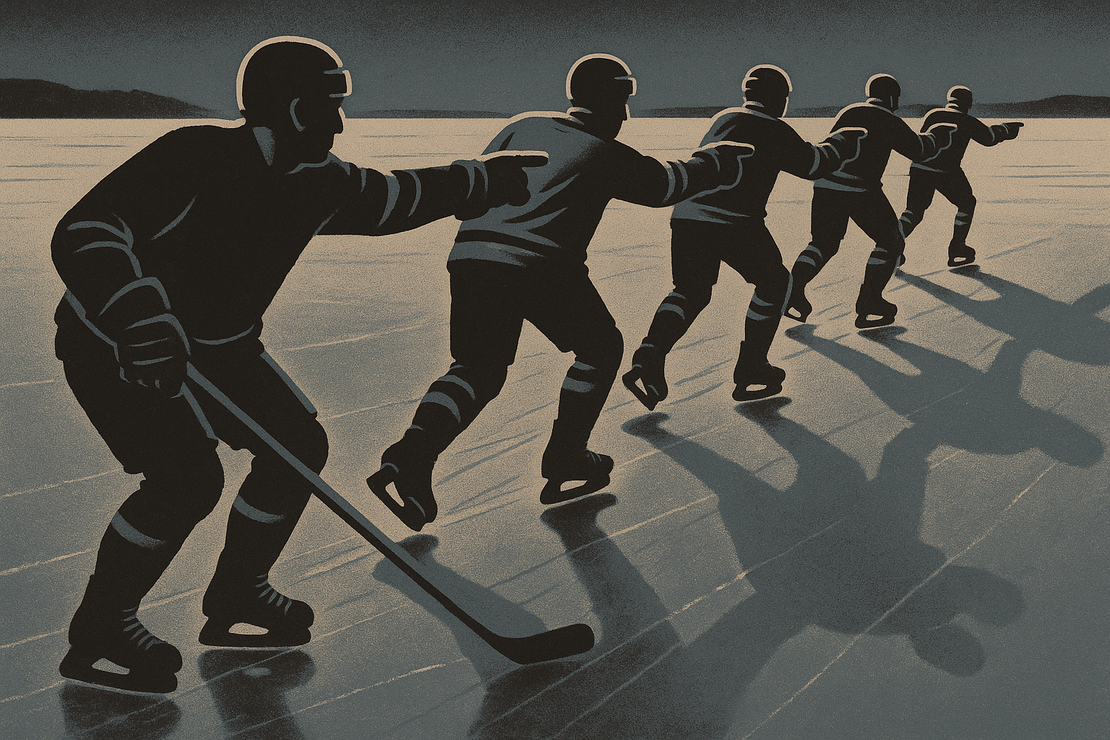
Everyone's a Ringer to Somebody
I played beer-league hockey for fifteen straight years, the kind with a checking ban and a roster that runs from former juniors to guys who learned to skate at thirty (me!), and I’ve noticed a tic in how everyone in it thinks, myself included. Whoever is better than you is a ringer. Not “better.” A ringer. A guy who doesn’t belong down here with us honest players, who’s slumming, who ought to be playing up a division and is padding his stats against us gentlemen of the game. The actual skill of the league has nothing to do with the judgment. You run the same math in the top tier and the bottom: draw the line at your own ability and call everyone above it a cheat. I suspect you probably don’t escape this issue until you truly graduate to the professional ranks, where incentives flip and you actually want to move up leagues.
Read More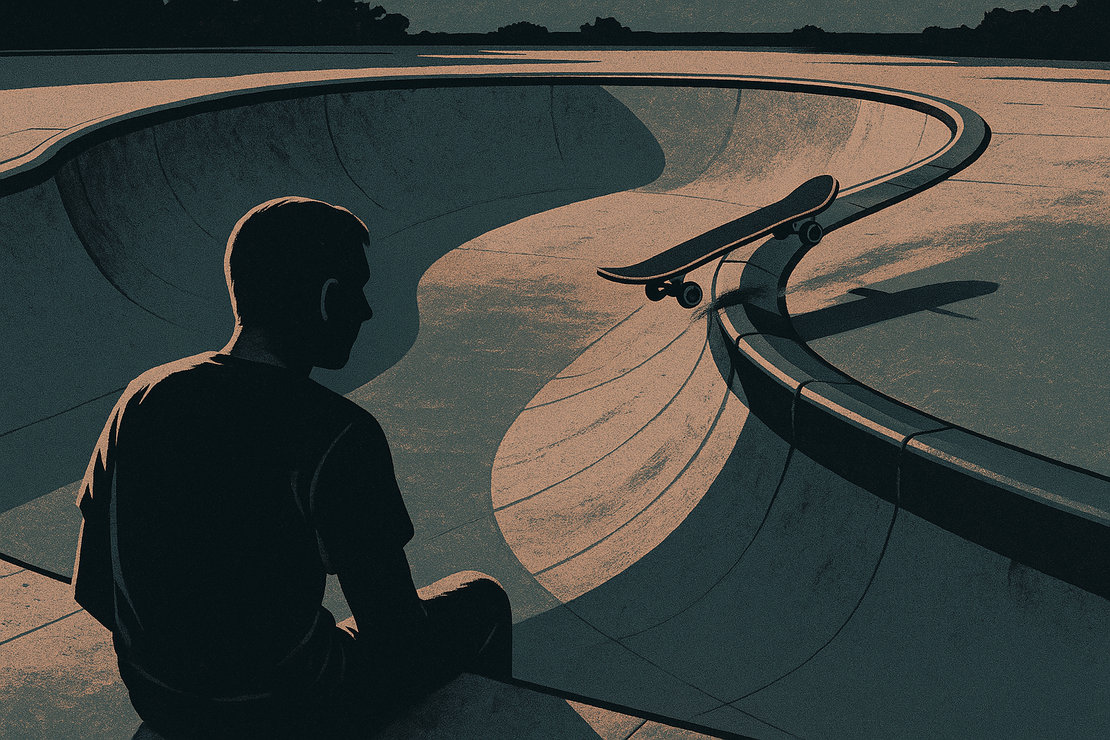
Can I Interest You in a Self-Riding Skateboard?
Friends — how much of your skate session do you waste actually skateboarding?
Read More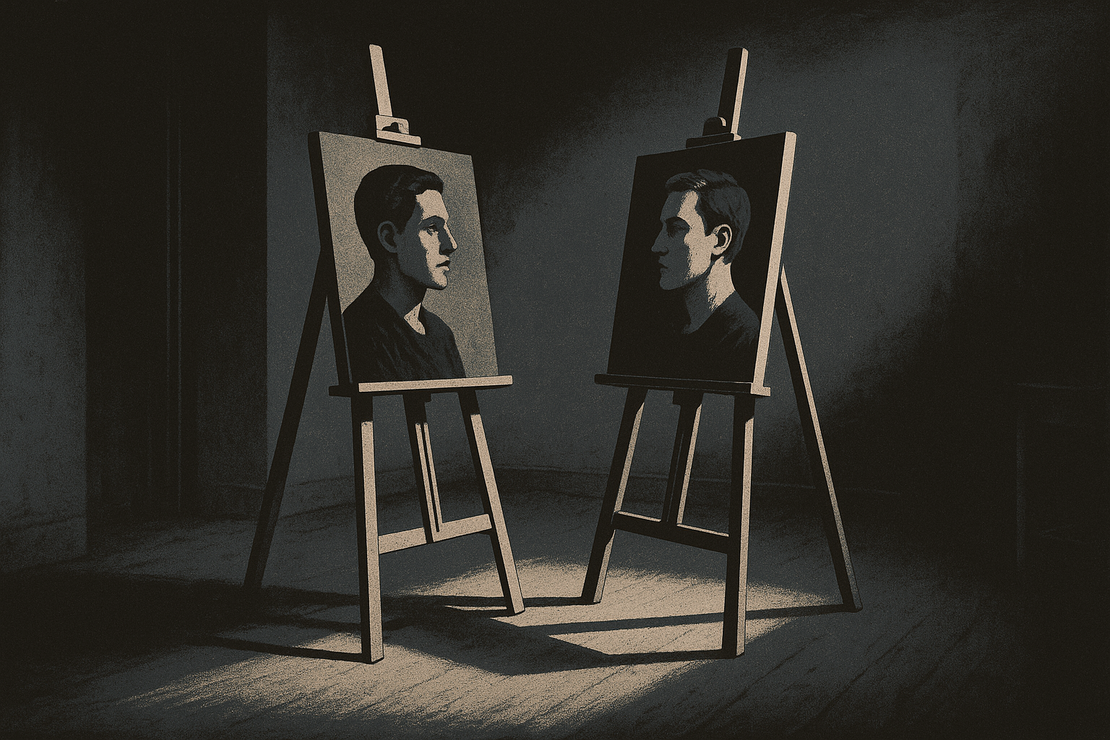
It Certified Its Own Forgery
When I was a kid we played the telephone game at birthday parties. A dozen of us in a line, somebody whispers a sentence to the first kid, it travels ear to ear down the row, and the last kid says it out loud. Purple monkey dishwasher. The whole game is the gap between what went in and what came out, and the laugh is always proportional to how far the thing drifted. It was lossy transmission before I’d ever heard the term “lossy.”
Read More
We Already Voted With Our Lives
I’m an electrical engineer by training and a software developer by trade, and these days I build AI-assisted creative tools, which means I spend a lot of my time arguing (largely with myself) about how much of the judgment has to stay human. And the longer I argue it, the more I keep tripping over one strange fact that nobody on either side seems to want to look at.
Read More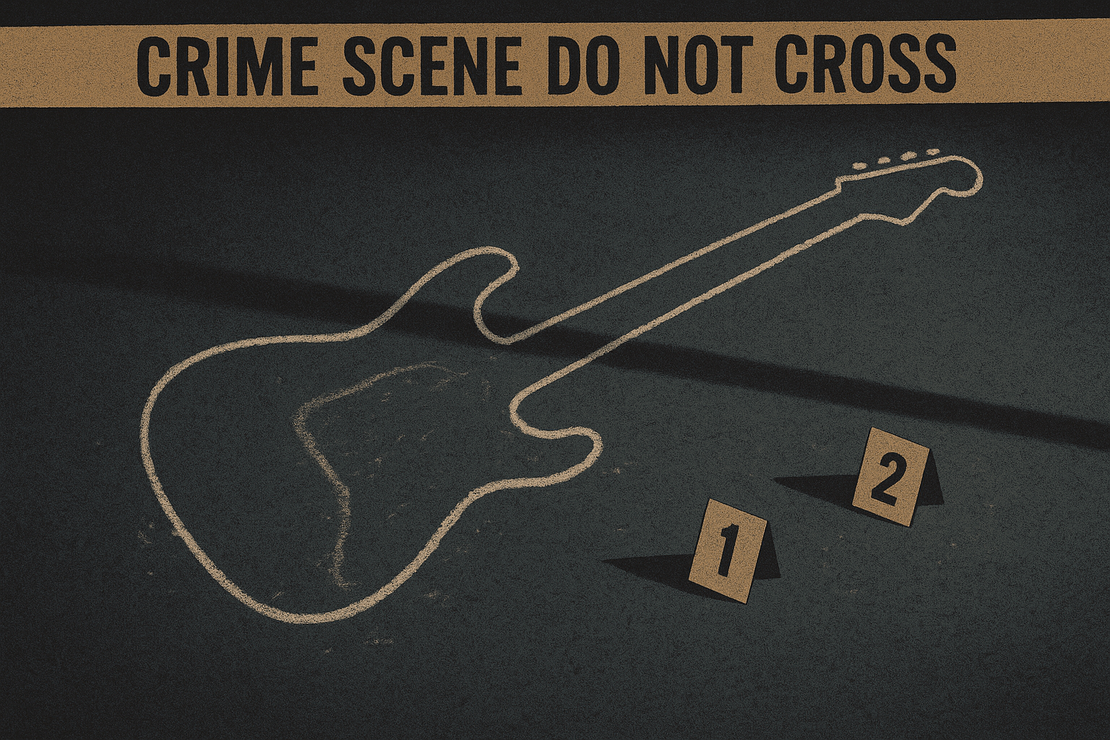
You Can't Police a Groove
In 2023 Ed Sheeran stood outside a Manhattan courthouse, having just won, and said that if the verdict had gone the other way he would have quit music for good. He had spent years and a reported fortune defending a four-chord progression and a backbeat against the estate of Marvin Gaye. Not a stolen melody, not a lifted lyric, not even Marvin’s 1964 passport. At issue was a chord pattern that sits under a thousand songs and predates copyright (and Marvin Gaye) by centuries. The man was, in effect, on trial for four chords and the rhythm that connects them. How did we build a world where you can be hauled into federal court over a sequence older than recorded sound?
Read More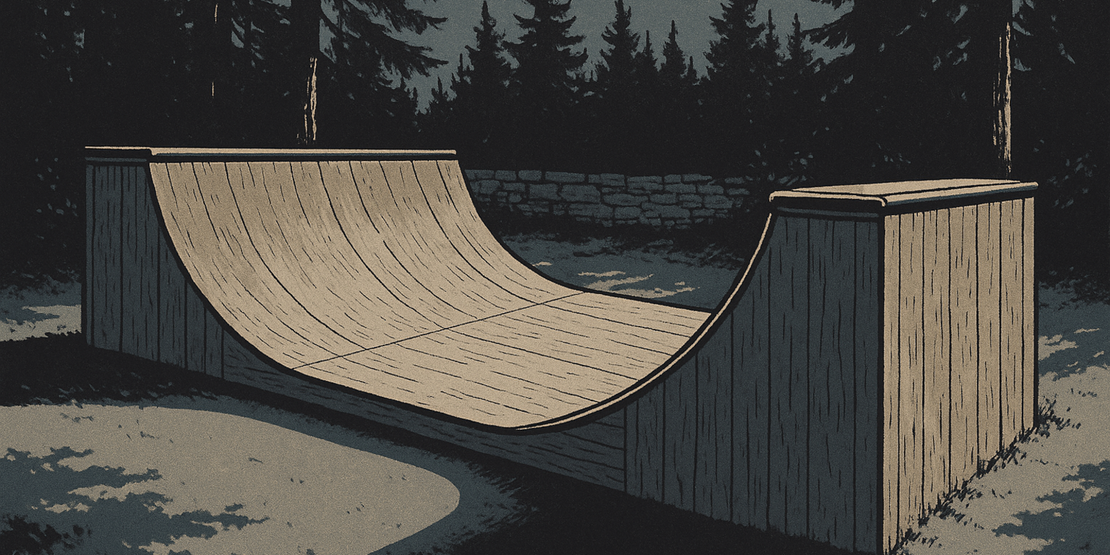
Riding an Invisible Ellipse
I rarely do things the easy way. In this case I designed and built a skateboard mini ramp not only to be durable and ride well, but also to look cool and blend into a residential environment where skateboard ramps aren’t always welcome with open arms. So from the jump I wanted it to look like it belonged, it needed to blend into the environment, a small pad I leveled within cedar tree woods with a surrounding limestone wall. Part of that blending involved open transitions, meaning instead of a squared off cut “box” to form the curved support structure, I wanted it curved top and bottom, which you rarely see done outside of metal framed ramps. I am not (yet!) a metalworker, so coming up with a way to have fully curved transitions was an integral part of the design.
Read More
Fifty Percent of What?
When critics noticed that a Fortune journalist named Nick Lichtenberg was publishing more articles in six months than his colleagues managed in a year, and that an AI model was doing a lot of the producing, the magazine’s leadership offered a defense that has stuck with me: “More than 50% is Nick.” It was meant to reassure. It did the opposite, and not for the reason everyone assumed.
Read More
The Please Is for Me
Growing up in Tennessee, saying yes ma’am and no ma’am was a big deal. So it probably shouldn’t have surprised me that I’d say please and thank you to a machine. I didn’t ever decide to do it. It comes out on its own, the same reflex that would fire if a person had done me the favor. And these days machines are doing me a lot of favors.
Read More
The Tells Were Mine First
I built a machine that detects AI writing, and the first thing it did, given enough rope, was call me a robot.
Read More
What AI Polish Does to Hunter S. Thompson
I know, it’s probably blasphemy to even mention AI writing in the same sentence as Hunter S. Thompson, but let’s run with it. An AI humanizer applied to his actual writing would have butchered him. The gonzo is the signature. The mangled syntax, the staccato outbursts, the way a sentence pivots mid-thought into something disreputable — those are not flaws an editor needs to clean up. They are the prose. Polish those out and you have not produced Thompson. You have produced a competent stranger’s version of Thompson, which is to say: an unremarkable column. And that doesn’t begin to address the struggles AI would have with nakedly promoting inhuman amounts of illicit drug use.
Read More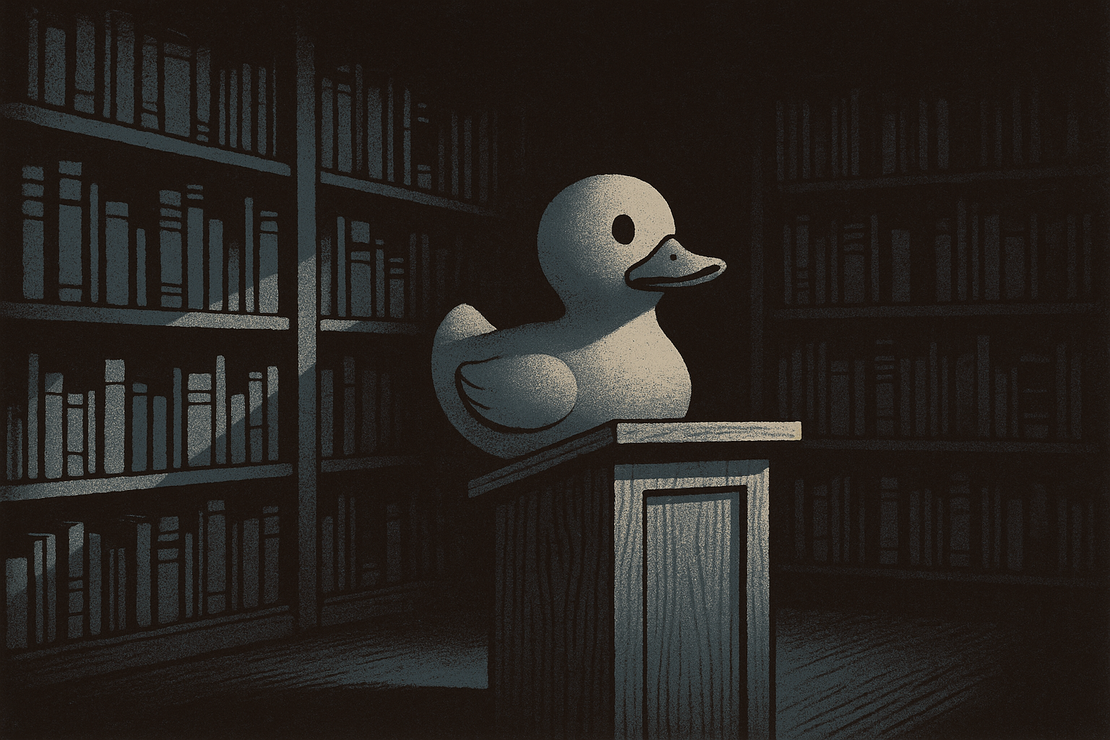
The Duck That Argues Back
Programmers have a trick called rubber-duck debugging. You keep a rubber duck on your desk, and when you’re stuck you explain your code to it, line by line, out loud, like a person who has lost their mind. Somewhere in the explaining you find the bug yourself. The duck does nothing, and the nothing is the point. Forcing the half-formed thing in your head into words another mind could follow is what surfaces the flaw. The duck is just permission to think out loud. In reality, few of us actually have a duck on our desk, but the rubber-ducking concept is very real.
Read More
Unlocked, Not Cheated
Standing on Surfaces That Move opened with part of an argument and stopped short of finishing it. It said where the value in creative work has moved: out of producing the work and into the judgment that steers it. It did not say why you’d hand any of the producing to a machine in the first place. You can accept everything in that essay, and everything in the ones that follow — that taste outlasts the tools, that format dictates discipline, that small and intimate beats big and optimized — and still stop me at the door with one question.
Read More
Standing on Surfaces That Move
The software engineering job has moved, seemingly overnight. Working engineers have not been deleted wholesale; the disappearance loudly predicted in recent years hasn’t happened. The work itself has moved, though, and the move is measurable. Line-by-line typing of code got cheap. The judgment about what’s worth typing, and whether what’s been typed will hold together at scale, got expensive. In fact the latter was always expensive, but the cheapening of coding itself has made the gap between the two meaningful.
Read More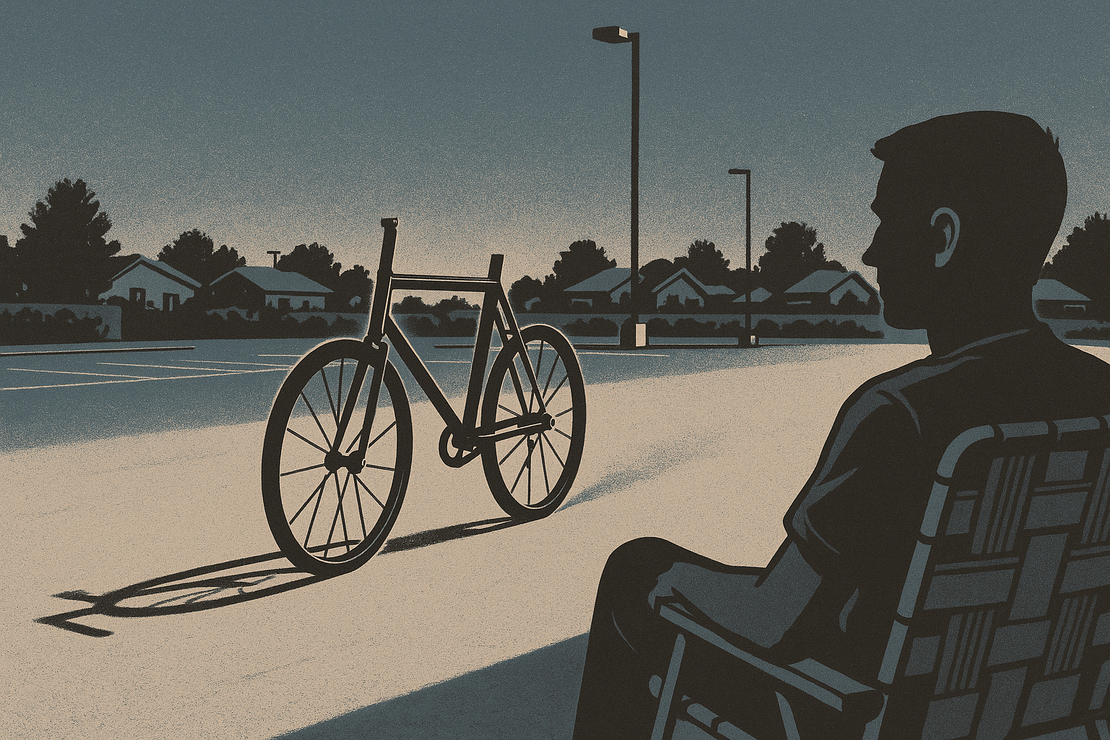
The Self-Riding Bicycle
Picture the launch. The lighting is good, the founder is in the nice plain t-shirt, and the thing under the cloth is a bicycle. The GhostRider™, he calls it. We asked a simple question, he says. What if riding a bicycle could be effortless? The bicycle, it turns out, rides itself: sensors, a gyroscope, a motor where the crank used to be. It balances, it steers, it accelerates, it leans through the corners. We removed the seat, he adds. And the pedals. What would you do with them? Not to mention the handlebar. Nobody’s there to hold on! It takes a clean lap around the stage, riderless, to applause.
Read More